What Makes Ojai Main Street Mixed Use So Distinct
March 5, 2026
March 5, 2026
On a map, Ojai’s Main Street looks like only a few walkable blocks. On the ground, it works like a curated village where design, scale, and policy shape every storefront. If you are weighing a mixed-use investment here, you want to know what truly drives value and how to underwrite it. This guide breaks down the physical fabric, the rules that keep chains in check, and the demand forces that sustain independent operators. Let’s dive in.
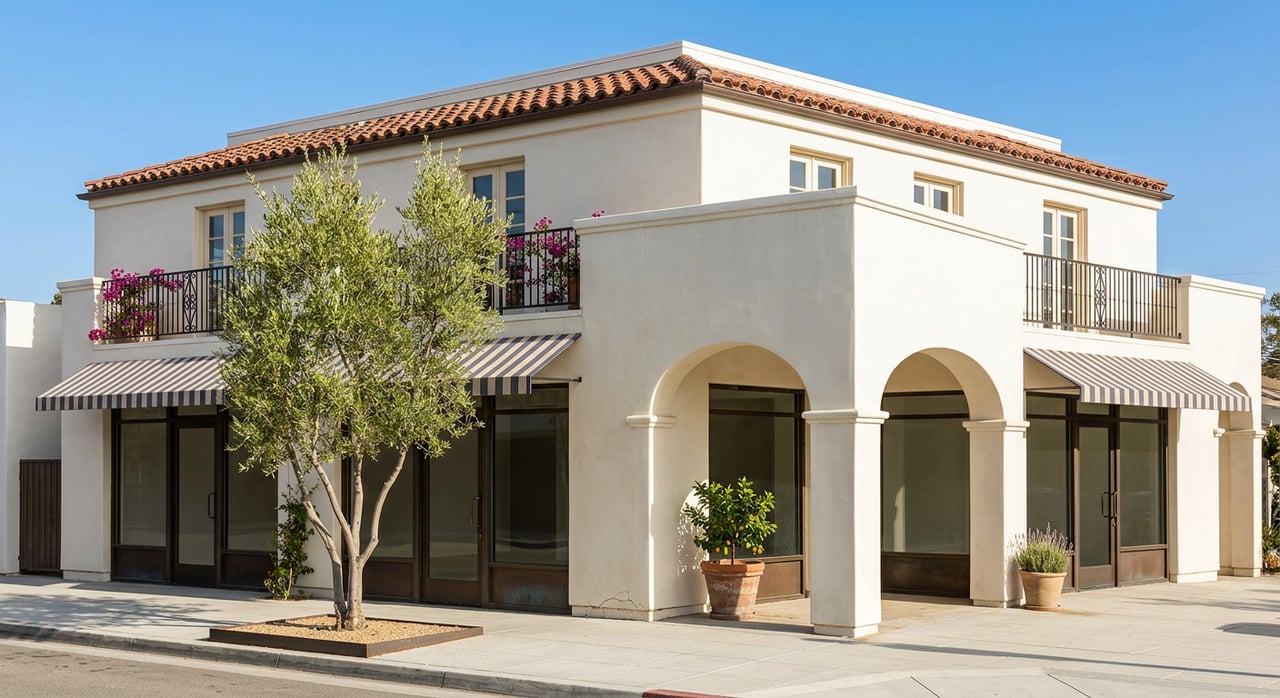
Ojai’s downtown core centers on Ojai Avenue, the Arcade Plaza, and the blocks around Libbey Park. The early 20th-century Arcade and the park create a compact, pedestrian-focused nucleus with low-rise buildings and short blocks that concentrate foot traffic. That historic pattern is well documented in local histories of the area’s Mission and Spanish Revival architecture. You can see the context in overviews of the Arcade and Libbey Park’s architectural story on the Ojai history site (Ojai history and architecture).
The city is small by design. Current Census figures show a population of about 7,563 to 7,637 residents, depending on the year you reference, which means a tight local base and strong reliance on visitors. You can review the latest population snapshot in the Census QuickFacts profile (Ojai population data). This scale is a big part of why Main Street looks, feels, and performs the way it does.
Most downtown bays are small. You frequently see streetfront units under 2,000 square feet and regular examples of ground-floor retail with offices or residences above. Public listings also show a few larger legacy spaces in the 2,000 to 3,800 square foot range. A representative example is a historic Main Street property with compact retail bays and upstairs space (downtown storefront example).
Ojai’s municipal code sets firm limits on “formula business” uses in the Downtown Commercial area. As written, a formula business downtown is generally not allowed if it exceeds 25 feet of street-level frontage or more than 2,000 square feet of usable area; outside downtown, formula uses over 10,000 square feet are restricted. The city also places the burden on applicants to prove they are not a formula business. These rules help preserve small-format, independent tenants and discourage national chain formats that rely on large footprints (Ojai formula business ordinance).
With a population around 7.6 thousand, locals support everyday retail, wellness, and services, but by themselves cannot carry every storefront year-round. American Community Survey profiles place median household income in the high tens of thousands for the city, which suggests above-average spending power for a town this size. The takeaway is simple. Operators rely on repeat locals plus meaningful visitor spend to reach targets (Census QuickFacts, Ojai).
The Ojai Valley Inn is the area’s largest single driver of higher-spending overnight guests and events. Within the resort, Spa Ojai spans roughly 31,000 square feet, anchoring wellness-driven visitation that spills into downtown for dining and shopping. This produces off-peak and weekday demand that can stabilize well-positioned food and beverage and boutique retail concepts (Spa Ojai overview).
The Ojai Music Festival at Libbey Bowl draws several thousand patrons across its multi-day program, with roughly 964 seats plus a lawn area at the Bowl. That weekend in June, along with other Bowl events, reliably boosts downtown foot traffic and sales. Weekly fixtures like the Sunday Ojai Certified Farmers Market further add recurring traffic for casual dining and retail (Ojai Music Festival press kit).
Recent press highlights a wave of chef-driven restaurants and boutique hospitality that attract Los Angeles visitors seeking a close-in escape. That trend supports higher-quality streetfront dining, tasting rooms, galleries, and wellness concepts aimed at both locals and overnight guests. It also raises the bar on design, patios, and experiential retail that fits Ojai’s look and feel (Ojai dining and hotel momentum).
Common tenant types downtown
Space sizes and asking rents vary widely by frontage, location, and patio potential. Public listings show examples such as a roughly 2,092 square foot restaurant offering at about $6,700 per month and a 3,859 square foot retail listing advertised near $42 per square foot per year. Treat these as advertised asking figures, not closed comps, and expect variability by block and build-out cost (Ojai commercial listings overview).
Walkability is a strength and a constraint. The core is built for foot traffic with limited curb parking and nearby lots, which supports browsing and dwell time. It also means tighter conditions for large deliveries or very high-turnover drive-in formats. Visitor guides, maps, and trolley notes commonly point to the pedestrian-first experience downtown (Ojai walkability context).
Target asset profiles
Underwriting checklist
Risk and return
If you are assembling a Central Coast mixed-use strategy, Ojai often plays the role of a destination boutique node. It complements coastal or wine country holdings by delivering a wellness plus arts-and-culture experience rather than mass-market retail. The fit can be powerful if you value character assets, small-bay flexibility, and hands-on tenant curation that matches the town’s design and policy framework (Ojai hospitality and dining trend).
If you want a discrete, data-driven view of what to buy, what rents to underwrite, and how to position a Main Street asset for long-term stability, let’s talk. Schedule a confidential, strategy-first conversation with Robert Rauchhaus.
Stay up to date on the latest real estate trends.
Learn more about commercial sales, leasing, business sales, M&A, and asset management.
Get In Touch With Our Team To Learn More
PO BOX 30766 SANTA BARBARA CA 93130