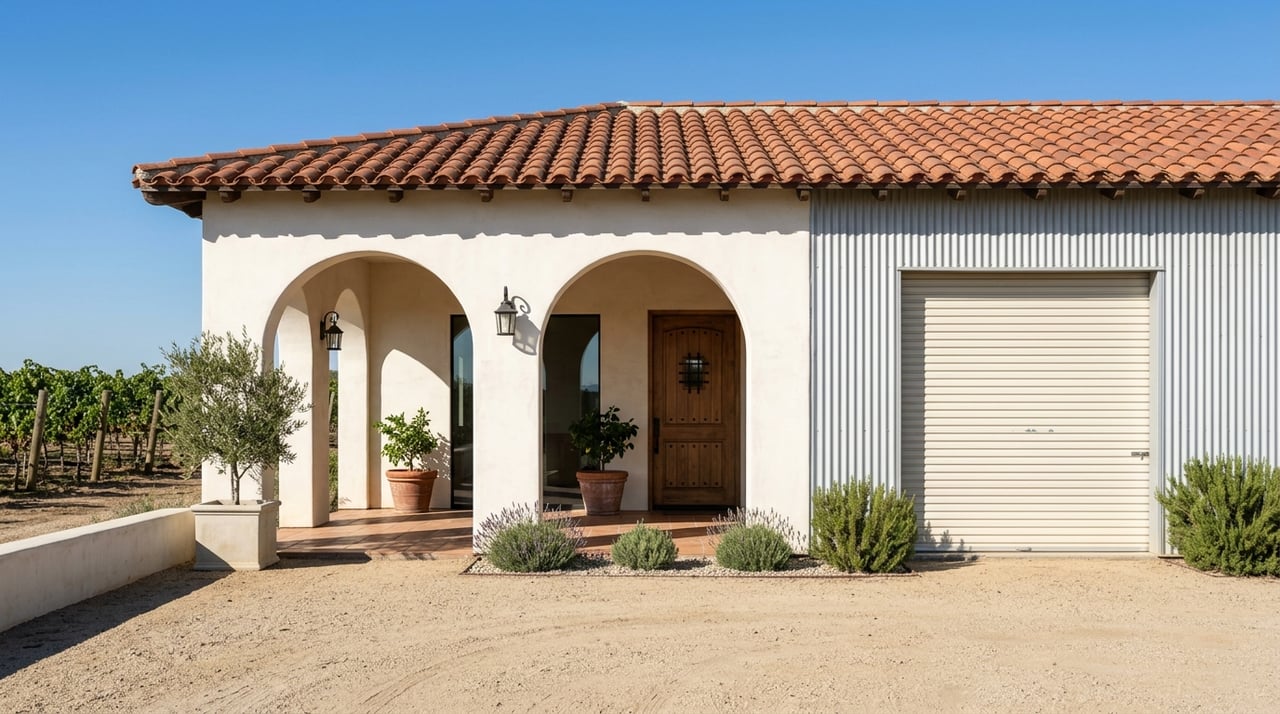
How Wine Tourism Influences Vineyard Values In Santa Ynez
April 2, 2026
April 2, 2026
If you are looking at vineyard property in Santa Ynez, acreage tells only part of the story. In this market, value is shaped not just by vines and production potential, but by how well a property connects to the region’s wine tourism economy. Understanding that link can help you assess pricing, income potential, and exit strategy more clearly. Let’s dive in.
Santa Ynez Valley operates as both an agricultural region and a tourism destination. According to the Santa Barbara Vintners 2024 facts sheet, Santa Barbara County includes 325 wineries and tasting rooms, 425 wine brands, and 7 AVAs, with the Santa Ynez Valley AVA standing as the county’s largest.
That scale matters because buyers are not evaluating vineyard land in isolation. They are often underwriting a property within a broader wine-tourism circuit that brings together production, hospitality, direct sales, and brand visibility.
Visit Santa Barbara notes there are about 50 tasting rooms in Los Olivos and more than 15 in Solvang, with additional growth in Santa Ynez and Buellton. Combined with the valley’s east-west orientation and range of microclimates, that concentration supports both grape diversity and a strong destination identity.
Wine tourism influences value because it can turn a scenic agricultural property into a recurring-revenue platform. A vineyard with legal use rights, a compelling visitor experience, and a strong direct-to-consumer system may support more income streams than a farm-focused property alone.
That distinction shows up in how winery and vineyard assets are valued. The Appraisal Institute’s 2025 valuation guide describes vineyards and wineries as special-purpose properties that blend real estate with tangible and intangible assets, often analyzed through cost, sales comparison, and income capitalization approaches.
In practical terms, that means value can reflect more than land, water, vines, and improvements. It may also reflect cash flow, hospitality infrastructure, operating rights, and the strength of the business attached to the real estate.
One of the clearest links between tourism and value is the direct-to-consumer, or DTC, channel. According to Silicon Valley Bank’s 2026 State of the U.S. Wine Industry report, tasting rooms and wine clubs account for more than half of average winery revenue, while wholesale contributes roughly one-third. The same report identifies Santa Barbara as a region with especially high DTC shares.
That is important because DTC revenue is often more attractive than lower-margin wholesale distribution. If a Santa Ynez property can consistently generate visits, convert guests into club members, and retain those members over time, the operating business may support a stronger going-concern value.
This does not mean every vineyard automatically earns a premium because it sits in wine country. It means the market often rewards properties that can turn tourism exposure into recurring, measurable cash flow.
Visitor traffic has real economic value because it feeds the most productive part of the customer funnel. SVB’s 2024 Direct-to-Consumer Wine Report states that 75% of wineries source club members from the tasting room, and that the average wine club member lifetime value has remained near $2,710.
The same report says 70% of total sales were reliant on tasting-room traffic. That means a tasting room is not just an amenity. It is often the main engine for customer acquisition, conversion, and repeat purchasing.
For valuation, that creates a useful framework. Tourism generates the visit, the on-site experience drives conversion, and digital follow-up helps extend customer value after the guest returns home.
Tourism alone is not enough if the business cannot maintain the relationship after the trip. SVB’s 2024 report says 16.1% of new club members were acquired through digital channels in 2023, showing that online tools now play a meaningful supporting role.
Shipping capability also matters. The Wine Institute’s DTC compliance resources highlight that winery shipping rules vary by state, so a producer needs a working compliance and fulfillment system to monetize demand beyond the tasting room.
From an investor or owner perspective, that means the strongest assets are often hybrid platforms. They benefit from in-person tourism, but they also have the systems needed to convert and retain customers after the visit.
Santa Ynez Valley has an advantage that many agricultural regions do not. It functions as a concentrated destination with multiple visitor nodes across six communities, rather than as a collection of isolated farm properties.
That density can support higher-quality visitation and easier itinerary building for guests. A visitor may move between Los Olivos, Solvang, Santa Ynez, and Buellton in a single trip, which can strengthen exposure for properties that are well-positioned within that travel pattern.
The broader county wine economy adds another layer of support. The Santa Barbara Vintners report cites a $1.7 billion annual economic impact and 10,202 full-time-equivalent jobs tied to the wider wine sector. That does not set property prices by itself, but it reinforces the scale and durability of the ecosystem in which these assets operate.
For some properties, value creation is not limited to grape production or bottle sales. It may also come from legally permitted hospitality and experience-based uses that diversify revenue.
Santa Barbara County’s Ag Enterprise Ordinance includes categories such as farmstay, campground, small-scale special events, educational experiences and opportunities, low-impact camping area, and small-scale agricultural processing. If a site is entitled for any of these uses, they may enhance income potential and strengthen the overall business case.
This is where diligence becomes especially important. Two vineyard properties with similar acreage can trade very differently if one has clearer operational rights, stronger visitor programming, or more developed hospitality infrastructure.
A key point in Santa Ynez is that grape economics and hospitality economics are not the same thing. Santa Barbara County’s 2023 crop report shows wine grapes were worth $98.562 million and ranked as the county’s third-most-valuable crop.
That is meaningful, but it is still different from the value of a branded operating asset. Buyers may underwrite the same property as a farm, a winery, a hospitality platform, or a hybrid business. Each lens can produce a different value conclusion.
This is one reason pricing in the category can be complex. A vineyard with modest production economics but strong DTC performance and tourism appeal may command attention that simple per-acre comparisons fail to capture.
Wine tourism can support value, but it does not remove market risk. SVB’s 2026 industry report notes that the industry continues to work through excess supply, with too many wineries and too much wine relative to current demand. It also points to price weakness concentrated in wines below $20 per bottle.
That means buyers and owners still need to focus on operating discipline. A strong location and appealing setting are helpful, but they do not replace pricing power, inventory management, conversion rates, or customer retention.
Tourism-driven value is strongest when it is supported by good business fundamentals. Without that, the visitor story may be attractive but insufficient.
If you are buying, selling, recapitalizing, or planning a long-term hold in Santa Ynez, these are often the most important questions:
These questions align with the valuation framework outlined by the Appraisal Institute and with the operating realities described in the SVB DTC data. They are also the questions that tend to shape negotiations, structure, and buyer interest in complex wine-country transactions.
In Santa Ynez Valley, wine tourism influences vineyard values because it can expand a property from an agricultural asset into an operating platform with multiple layers of income. The most resilient value often comes from the combination of credible vineyard fundamentals, legal hospitality use, strong on-site experiences, and a DTC system that turns visits into repeat purchasing.
For owners, that can shape asset management and exit planning. For buyers, it can change how you assess both risk and upside. If you are weighing a vineyard, winery, or hospitality-oriented agricultural asset in the valley, working from both the real estate side and the business side is often essential.
If you want a discreet, data-driven perspective on vineyard, winery, or hospitality asset strategy in the Santa Ynez Valley, Robert Rauchhaus can help you evaluate valuation drivers, positioning, and transaction options.
Stay up to date on the latest real estate trends.
Learn more about commercial sales, leasing, business sales, M&A, and asset management.
Get In Touch With Our Team To Learn More
PO BOX 30766 SANTA BARBARA CA 93130