Repositioning Office And Flex Space In San Luis Obispo
April 23, 2026
April 23, 2026
If you own office or flex property in San Luis Obispo, the question is no longer whether workplace demand has changed. It has. The more useful question is how to respond in a way that protects value, fits local demand, and avoids unnecessary capital spending. In a market with tight vacancy but older inventory, smart repositioning often means refining the asset you have rather than chasing a full reinvention. Let’s dive in.
San Luis Obispo is a relatively small but highly connected market. The city’s 2024 population estimate was 49,729, with 54.4% of adults holding a bachelor’s degree or higher and 92.7% of households having broadband, according to the U.S. Census QuickFacts. That profile supports demand from professional services, digital work, and hybrid users who may not need large, traditional office footprints.
The labor picture also points to a stable base for office and flex demand. The California EDD reported 4.3% unemployment in San Luis Obispo County for December 2025, while local employment remains concentrated in leisure and hospitality, education and health services, and professional and business services. For owners, that means demand is still present, but users may want different space than they did a few years ago.
Local office fundamentals remain fairly tight on paper. Colliers reported 2.9% office vacancy, 4.0% availability, 44,000 square feet under construction, and 6.8 million square feet of inventory in H1 2025. That is not a market defined by broad-based distress.
At the same time, the inventory mix matters. Colliers noted that much of the market is older product, with 4.2 million square feet of 1 and 2 Star space, 2.6 million square feet of 3 Star space, and only 52,000 square feet of 4 and 5 Star space. That gap suggests owners of older buildings may need selective upgrades and smarter suite design to stay competitive.
National workplace data helps explain why. The Bureau of Labor Statistics found that 22.9% of employed people teleworked in the first quarter of 2024, and more teleworkers were working only part of their hours from home. In practical terms, many tenants still want office space, but they often want less of it and want it to work harder.
The office decision today is less about raw square footage and more about usability. According to CBRE’s 2025 workplace survey, 72% of companies said they had met attendance goals, and 67% expected to keep or expand their footprints over the next three years. That supports the idea that office use is stabilizing, even if layouts and lease strategies are evolving.
CBRE also found that the most valued amenities include proximity to transit, parking, food and beverage, indoor air quality, and sustainability. In San Luis Obispo, owners do not always need a major redevelopment to respond to those priorities. In many cases, practical improvements can better align an existing building with current demand.
For many office owners, the most effective repositioning steps include:
These changes fit what tenants are already signaling. They also tend to be easier to underwrite than a wholesale conversion strategy.
Flex space is increasingly relevant because many users need a blend of office, storage, service, lab, or light production space. Cushman & Wakefield’s flex-office research shows that occupiers are using flexible options to manage footprints and support return-to-office goals. For owners, that points toward demand for smaller suites, shared amenities, and short-to-medium-term flexibility.
The local industrial market supports that opportunity. Early 2025 reporting from Lee & Associates placed industrial vacancy at roughly 4.2% to 4.5%, with about 10.1 million to 10.2 million square feet of inventory and average asking rents near $16.5 per square foot NNN. That is a relatively healthy backdrop for functional flex-industrial product.
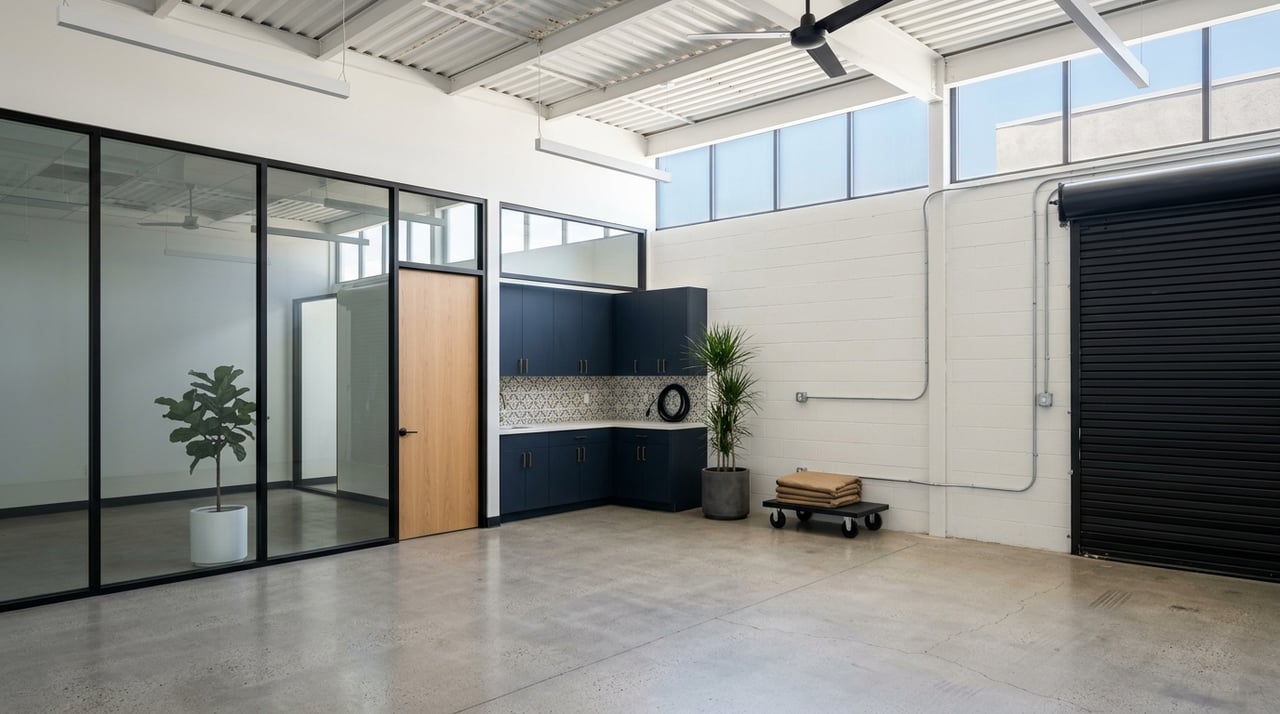
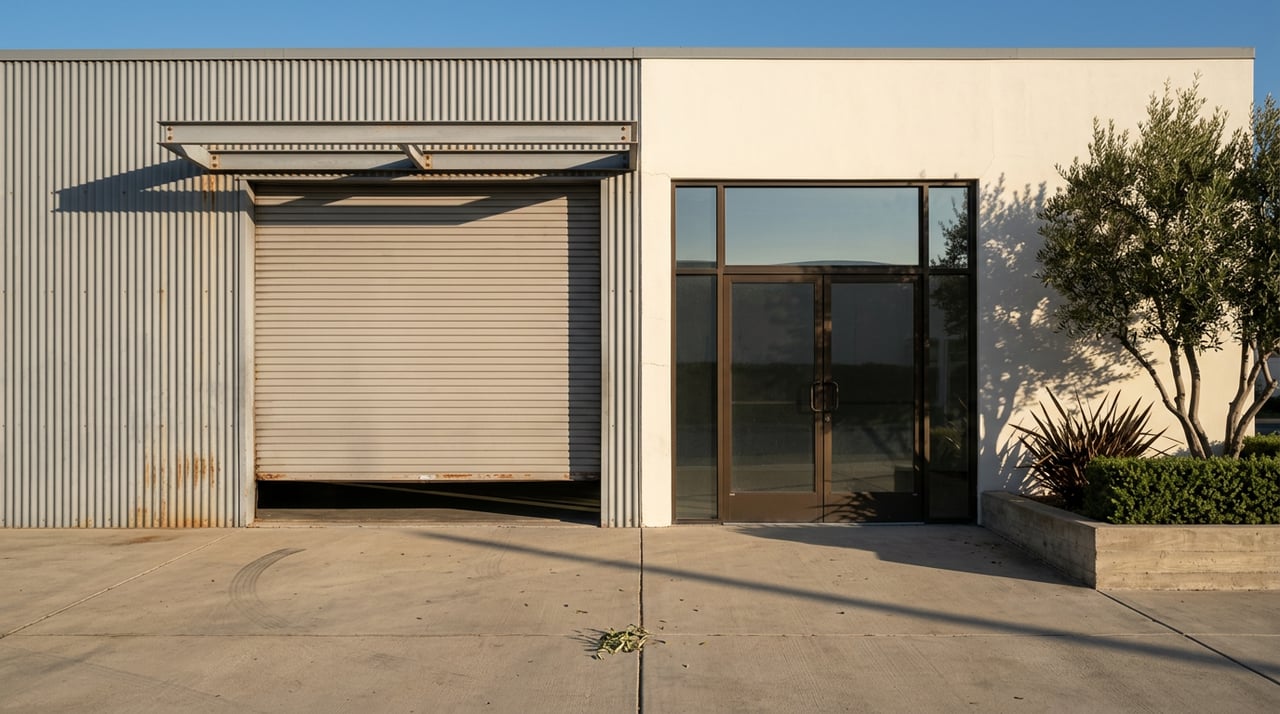
For flex and light-industrial assets, the goal is not to mimic premium office space. It is to make the property useful for small and mid-sized occupiers. Features that typically matter most include:
In other words, utility often wins over polish. A well-configured flex building can compete effectively if it solves real operational needs.
In San Luis Obispo, the strongest repositioning play is often right-sizing and reuse rather than total conversion. That is partly because the market already has low vacancy, and partly because the city’s policy environment supports business retention, downtown vitality, and incremental reuse. The City’s 2023 Economic Development Strategic Plan reinforces that direction.
Owners should think in terms of a menu of strategies, not a single answer. Depending on the property, the right path may be lease-up with targeted improvements, a flex conversion, medical adaptation, creative office repositioning, or a mixed-use concept where zoning allows it.
Here are several practical paths worth evaluating:
The right strategy depends on floorplate flexibility, access, parking, building systems, and the cost of getting to market.
Before you commit to design or capital planning, confirm what the site can legally support. The City of San Luis Obispo advises owners to start by identifying the property’s zoning and then using Table 9 in the zoning regulations to determine which uses are allowed and what type of permit may be required. For larger changes, traffic-impact review may also become part of the approval path.
This is especially important if you are considering alternative uses. The zoning framework includes uses such as live/work units, mixed-use projects, studio uses, medical office, office-supporting retail, industrial research and development, manufacturing-light, warehousing, and wholesaling and distribution in at least some districts. That creates meaningful flexibility, but only if your specific property and approval path line up.
Not every repositioning strategy fits every part of the city. The City’s specific area plans offer useful clues about where certain uses may be more compatible.
The Airport Area Specific Plan envisions business parks, industrial mixed-use, and residential development, and a 2025 ordinance allows mixed-use development in the Service Commercial and Manufacturing zones by permit where appropriate. Mid-Higuera is identified as an opportune area for innovative mixed-use and reuse involving office, multifamily residential, and industrial spaces. Higuera Commerce Park includes service-commercial warehousing and a special industrial area for light industry and research.
The city also notes that the Historic Railroad District includes newer mixed-use structures occupied by creative and tech businesses, restaurants, and residential uses. That matters because it shows local precedent for adaptive reuse and hybrid property formats that fit the character of San Luis Obispo.
A disciplined repositioning plan starts with a clear view of the asset, not a trend headline. In this market, the best candidates are typically buildings with flexible floorplates, decent parking and access, and enough zoning latitude to support office, medical, creative, or light-industrial users. Buildings that cannot meet those needs may require a more substantial use change or a different disposition strategy.
A practical review should include:
This is where a strategic advisory approach can add real value. The goal is not simply to spend capital, but to direct it where it has the highest probability of improving lease-up, tenant retention, or exit value.
In San Luis Obispo, the data does not point to a one-size-fits-all answer. Office vacancy remains low, industrial and flex conditions are healthy, and tenant demand has shifted toward efficiency, flexibility, and practical amenities. That creates opportunity for owners who are willing to think carefully about suite size, building function, and zoning-backed reuse options.
If you are evaluating how to reposition an office or flex asset, a measured plan usually outperforms a reactive one. The most successful strategy is often the one that balances local demand, entitlement reality, and capital discipline. If you want a confidential conversation about repositioning, leasing strategy, or value creation for a commercial asset, connect with Robert Rauchhaus.
Stay up to date on the latest real estate trends.
Learn more about commercial sales, leasing, business sales, M&A, and asset management.
Get In Touch With Our Team To Learn More
PO BOX 30766 SANTA BARBARA CA 93130