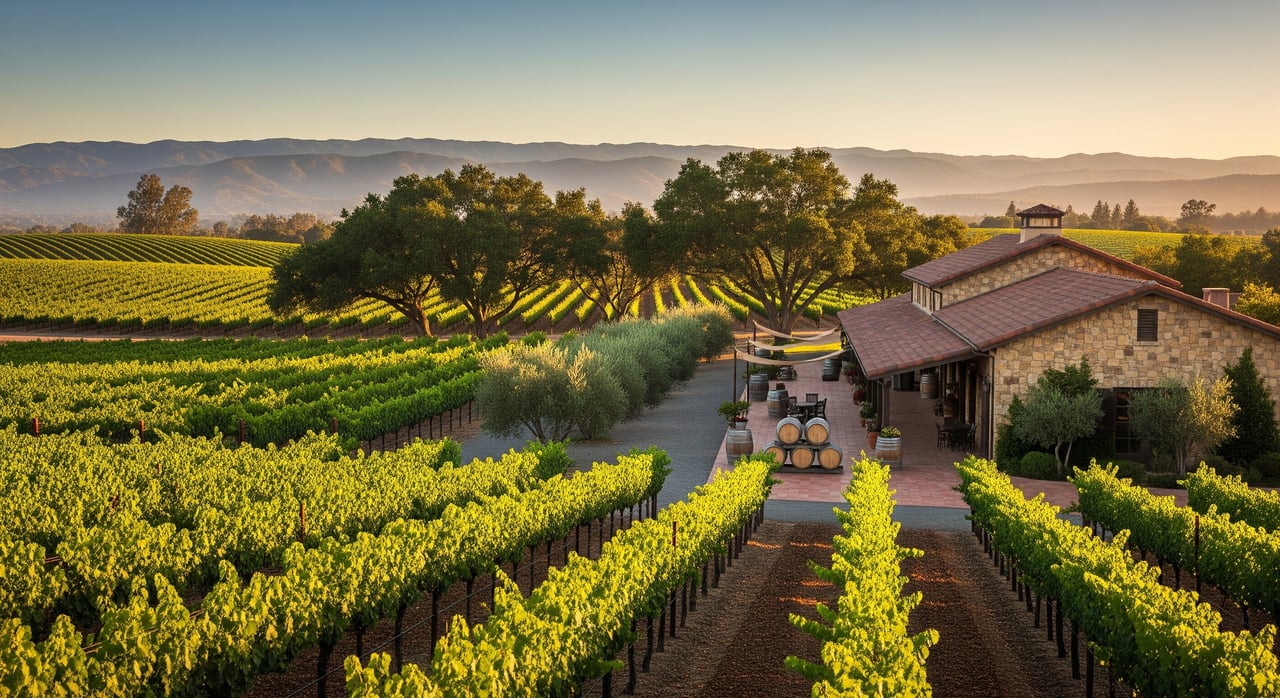
How Santa Ynez Vineyards Compare To Napa Investments
February 5, 2026
February 5, 2026
Are you weighing vineyard investments in California but unsure whether Napa’s brand premium justifies the price over Santa Ynez? You are not alone. Many family offices and private investors ask how entry costs, operating economics, and exit paths actually compare. In this guide, you’ll get a clear, investor-focused look at Santa Ynez Valley relative to Napa so you can allocate capital with confidence. Let’s dive in.
Napa is the global benchmark for high-end Cabernet and luxury wine tourism. It delivers strong direct-to-consumer performance, high per-visitor spend, and the deepest pool of prestige buyers at exit. Multiple industry and broker reports describe Napa as the most price-inelastic market because of brand power and tight plantable supply.
Santa Ynez Valley is a premium Central Coast appellation with fast development since the 1990s. Sub-AVAs like Ballard Canyon, Happy Canyon, and Sta. Rita Hills provide clear varietal identities, especially Rhône varieties and cool-climate Pinot Noir and Chardonnay. Santa Ynez offers comparable quality potential at materially lower acquisition cost, with more room to build brand and hospitality value.
For investors, the trade-off is straightforward: Napa means higher absolute entry pricing and robust luxury tourism dynamics. Santa Ynez means lower entry pricing, more varied brand outcomes, and a value-add path where execution and positioning matter.
When you evaluate vineyard assets in either region, break the cost into parts:
The headline difference is the entry point. Broker reporting shows Napa properties trading at a premium multiple versus Santa Barbara County. In Santa Ynez, you can often acquire more acreage or a higher-specification site for the same capital.
Vineyards follow consistent biological and permitting timelines. Typical paths include 0 to 2 years for permitting and site prep, planting by year 1 or 2, minimal grapes in years 1 to 2, rising yields in years 3 to 5, and meaningful revenue by years 5 to 7. This timing aligns with cooperative extension and viticulture cost models. Carry costs are significant in the early years unless you lease to a grower or acquire established vines.
Grape prices vary by region and variety. Napa Cabernet has historically commanded the highest grape prices in the state. Santa Barbara County grape prices tend to be lower on average, though premium sub-AVAs and varieties can perform well, especially when channeled into a brand with strong direct-to-consumer sales.
Your revenue mix matters as much as your farming. DTC margins are typically strongest, but they demand consistent visitor flow, club growth, and brand storytelling. Wholesale and distribution provide scale and stability but carry tighter margins and brand-building requirements.
Napa’s global reputation drives high DTC spend and a luxury hospitality ecosystem that supports premium pricing for tastings, memberships, and experiences. This dynamic underpins valuations for wineries with established brands and permits.
Santa Ynez benefits from steady regional tourism and proximity to Santa Barbara. The visitor profile leans toward boutique estates, family-run tasting rooms, and intimate experiences. While average spend is lower than Napa, the lower acquisition cost can leave more room for capital to build a brand, refine hospitality, and grow DTC. Sub-AVA clarity helps positioning. For example, Ballard Canyon is known for Rhône varieties and Sta. Rita Hills for cool-climate Pinot Noir and Chardonnay.
Common strategies in Santa Ynez include:
Coastal California wine regions face heightened wildfire frequency and smoke exposure. Insurance availability and premiums have shifted since major fire seasons, affecting underwriting and lender criteria. You should stress-test coverage options and deductibles early in the process and assume higher-than-historic premiums in risk-exposed corridors.
Water reliability is central to long-term viability. Central Coast vineyards use a mix of groundwater and surface supplies. Groundwater basins fall under evolving regulation, and rules vary by basin. Deal-level diligence should confirm water rights, seasonal reliability, and any basin-specific pumping limits.
Winery and tasting-room permits require county planning review. Event programs and lodging elements can add more review layers. Napa’s regulations are widely regarded as stringent, with high scrutiny given winery density and environmental protections. Santa Barbara County also has clear processes and environmental review. Agricultural properties may be subject to Williamson Act contracts or conservation easements that limit development and influence resale.
Labor availability and cost inflation affect all California vineyards. Mechanization can reduce pressure but depends on trellis choice, terrain, and variety. Include contingencies in operating budgets and evaluate contractor depth for harvest and canopy work.
Expect long holds of 7 to 15 years or more. Common exits include strategic sales to wineries, family succession, or estate repositioning toward hospitality. Napa’s buyer pool includes global capital with a strong appetite for prestige assets. Santa Ynez has an active pool of family buyers, regional operators, and brands, though transaction volumes are smaller and more idiosyncratic.
For many portfolios, Santa Ynez serves as a diversification play within California premium wine assets. Lower entry pricing and room for active value creation can produce attractive risk-adjusted returns. Napa offers “instant brand” attributes at purchase but with higher entry costs and less multiple expansion from improvements.
A practical path is to start with smaller parcels or partnerships using experienced operators, then scale as you refine your operating thesis.
Use a structured approach before you write an offer:
Consider prioritizing Napa if you:
Santa Ynez can be compelling if you:
You do not have to choose purely on brand prestige or entry price. Treat Napa and Santa Ynez as distinct strategies. Napa delivers global brand power and luxury tourism economics at a premium. Santa Ynez offers lower-cost entry and room to create value through site selection, farming excellence, brand building, and hospitality. The right choice depends on your time horizon, appetite for active management, and exit goals.
If you are exploring a Santa Ynez or Napa allocation, you will benefit from local underwriting, access to current comp sets, and integrated guidance across real estate, operations, and brand strategy. For confidential, data-driven advisory across brokerage, M&A, and asset management, connect with Robert Rauchhaus.
Stay up to date on the latest real estate trends.
Learn more about commercial sales, leasing, business sales, M&A, and asset management.
Get In Touch With Our Team To Learn More
PO BOX 30766 SANTA BARBARA CA 93130