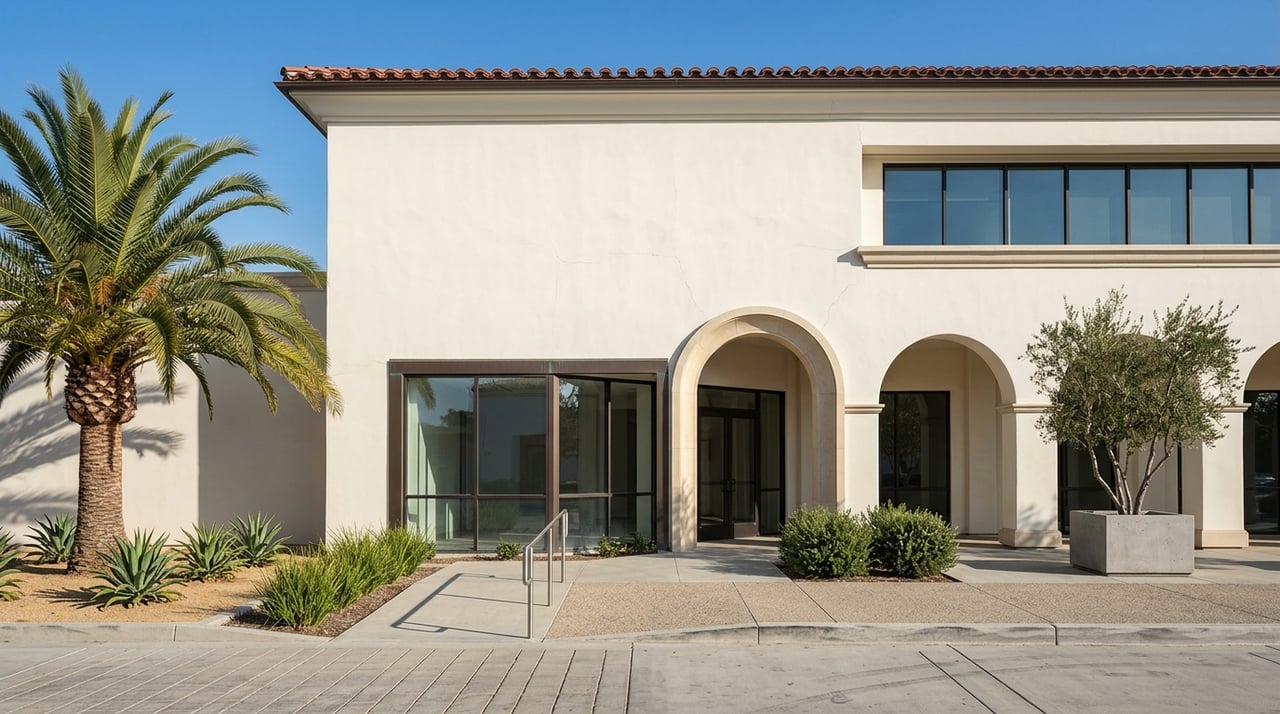
Ventura Medical Office Versus General Office For Investors
April 16, 2026
April 16, 2026
If you are comparing medical office to general office in Ventura, the biggest question is not just yield. It is durability of demand, lease behavior, and capital risk. In a market where traditional office still faces elevated vacancy and sublease competition, medical office can look more defensive, but it also comes with more specialized underwriting. This guide walks you through how to think about both asset types in Ventura so you can evaluate risk with more clarity. Let’s dive in.
Ventura has a local backdrop that matters for healthcare real estate. According to SCAG demographic data, Ventura County’s share of residents age 65 and older rose from 13.0% in 2013 to 18.1% in 2023. That aging trend supports recurring demand for outpatient care, specialty services, and follow-up treatment.
The local healthcare footprint is also meaningful. Community Memorial Healthcare’s Ventura campus includes the main hospital along with outpatient uses such as medical office space, a cancer center, a health center, and urgent care. Ventura County Medical Center at 300 Hillmont Avenue has 180 licensed beds, which reinforces the role of hospital-linked care delivery in the city.
For investors, this matters because medical office demand is often tied to patient access and health-system networks rather than to broad office-using employment alone. In the Ventura corridor, that distinction can shape both occupancy resilience and leasing strategy.
Medical office buildings serve a different user base than general office. Typical tenants include physicians, diagnostic providers, rehabilitation clinics, pharmacies, and outpatient surgical users. These spaces usually need more infrastructure than a standard office suite.
According to Healthpeak’s 2024 annual report, outpatient medical buildings often require added plumbing, electrical and mechanical capacity, higher structural loads, and other specialized construction. The same report notes that 78% of its outpatient medical buildings were on or adjacent to hospital campuses, and 96% were affiliated with hospital systems.
That helps explain a core rule of medical office investing: location is not just about visibility or traffic counts. In many cases, proximity to a hospital campus or established outpatient corridor is a primary value driver.
General office typically offers broader tenant flexibility. Space can often be leased to professional services firms, finance users, administrative teams, or other conventional office occupiers with less specialized build-out.
That flexibility can be an advantage. When a tenant leaves, general office space is usually easier and less expensive to reconfigure for the next user. For investors, that can mean a wider prospective tenant pool and simpler repositioning options.
The trade-off is that tenant demand may be more cyclical. In Ventura County, office users are operating in a market where vacancy and sublease availability remain elevated, which can create more pricing pressure and more leasing competition.
Traditional office in Ventura County remains a tenant-friendly market. NAI Capital reported vacancy at 12.0% in Q1 2025, 12.4% in Q2 2025, and 12.6% in Q4 2025. By late 2025, direct asking rents were about $2.71 per square foot full service, while sublease asking rents were down to $1.97, and sublease inventory had grown to more than 580,000 square feet.
That sublease competition matters. When tenants have more options, landlords often face slower lease-up, more concessions, and more renewal leverage shifting to occupiers. NAI also noted that much of 2025 leasing activity was driven primarily by renewals rather than broad-based expansion.
Colliers’ Q2 2025 report for the San Fernando Valley and Ventura County found overall availability at 24.1%, with demand led by healthcare and finance tenants. That is an important distinction for investors weighing generic office against healthcare-linked office in Ventura.
One of the clearest differences between medical office and general office is lease duration. ULI’s Emerging Trends findings, cited in the research, note that medical office tenants can sign 15- to 20-year leases, and renewal rates are typically 80% or higher. The logic is straightforward: providers are less likely to move far from their patient base because relocation can weaken referral patterns and market share.
By contrast, CBRE’s national office benchmark showed a 4.3-year average office lease term and a 3.6-year average renewal term for traditional office. That is a very different cash flow profile.
Medical office lease structure can differ too. Healthpeak reported that about 76% of its outpatient medical square footage was triple-net leased at year-end 2024. For investors, that can improve expense recoverability, though the exact economics still depend on the tenant, lease language, and the building’s capital needs.
Not all medical office tenants carry the same risk. JLL’s medical outpatient building outlook says health-system-backed tenants led 46% of medical leasing in 2025 and specialty providers represented 36%. Health-system-backed users often bring stronger credit and longer-term commitment than smaller independent practices.
In Ventura, that makes nearby hospital ecosystems especially relevant. An asset positioned near Community Memorial Healthcare or Ventura County Medical Center may deserve a different underwriting lens than a stand-alone building with no clear hospital affiliation or referral ecosystem.
For many investors, the practical takeaway is simple: campus adjacency and tenant sponsorship can matter as much as the rent roll itself.
The main underwriting divide between medical office and general office is build-out cost. CBRE estimates that a new medical outpatient build-out in Southern California costs about $200 to $300 per square foot, versus roughly $60 to $155 per square foot for a new general office build-out.
JLL’s 2026 fit-out guide, as cited in the research, puts the national average MOB fit-out at $412 per square foot. It also notes that higher-acuity outpatient suites may require advanced mechanical, electrical, and plumbing systems and can function more like mini-hospitals than conventional office space.
This has direct implications for your investment model:
General office is usually easier to adapt. If your strategy depends on repositioning, multi-tenant flexibility, or faster backfilling, that may support a general office thesis despite weaker market fundamentals.
National performance data also shows stronger fundamentals for medical office than for traditional office. CBRE’s Q4 2025 MOB figures showed 9.8% vacancy, record average asking rent of $25.23 per square foot, and 1.26 million square feet of positive absorption.
JLL’s March 2026 outlook reported MOB occupancy at 92.7% and average rent growth of 3.3% year over year, with health systems leading new outpatient development. While Ventura is its own market, these figures help frame why many investors see medical office as a more durable niche than generic office.
If you are evaluating a Ventura medical office opportunity, focus on a narrow set of variables first.
Campus adjacency is a major value driver in this property type. Buildings on or near established hospital and outpatient clusters may benefit from stronger referral patterns, provider visibility, and long-term relevance.
A health-system-backed tenant often offers a different risk profile than a small independent user. Review credit quality, lease guarantees, renewal history, and whether the tenancy is integrated into a broader care network.
Medical office can offer stronger lease durability, but it rarely offers cheap turnover. Underwrite more capital for tenant improvements, infrastructure upgrades, and possible downtime between users.
Some medical suites can transition to similar users fairly well. Others are so specific that releasing options become narrow. The more specialized the layout and systems, the more important your replacement tenant assumptions become.
General office is not automatically the weaker investment. In Ventura, it may appeal to investors who are seeking basis discounts, value-add leasing upside, or flexible repositioning opportunities in a tenant-favorable market.
That said, the risk profile is different. With elevated availability and sublease competition, you may be underwriting shorter lease duration, more concession pressure, and a broader set of lease-up scenarios. In other words, general office can be more of a pricing and execution play, while medical office may be more of a durability and credit play.
If you are deciding between the two, this framework can help:
In Ventura specifically, the local healthcare base and aging population support a credible medical office thesis. At the same time, traditional office market conditions suggest you should stay disciplined on rent assumptions, downtime, and renewal probability.
For investors evaluating complex office and medical assets on the Central Coast, a careful underwriting process matters more than broad asset labels. If you want a discreet, data-driven conversation about acquisition strategy, leasing risk, or value creation, Robert Rauchhaus can help you assess the opportunity with a fiduciary, market-specific lens.
Stay up to date on the latest real estate trends.
Learn more about commercial sales, leasing, business sales, M&A, and asset management.
Get In Touch With Our Team To Learn More

PO BOX 30766 SANTA BARBARA CA 93130