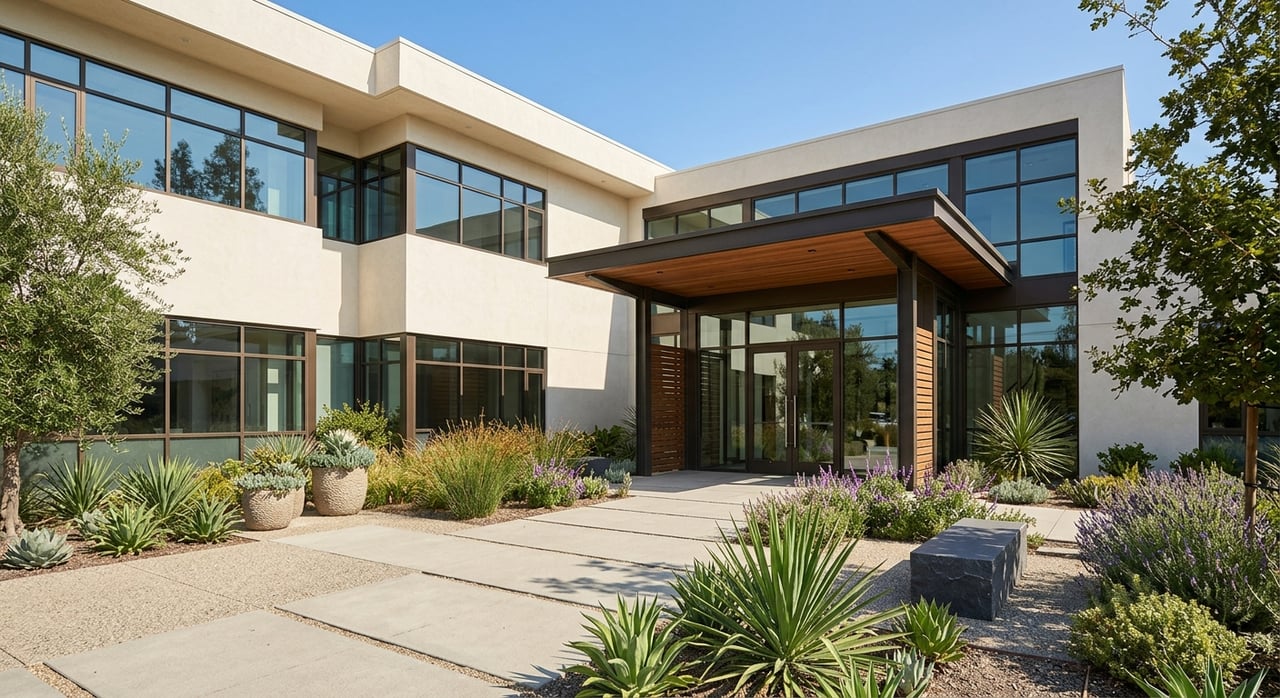
Strategic Options For Ventura Medical And Office Owners
July 16, 2026
July 16, 2026
If you own a medical or professional office building in Ventura, this market is asking tougher strategic questions than it did a few years ago. Generic office fundamentals have weakened, while medical office continues to benefit from durable health care demand and the shift toward outpatient care. If you are weighing whether to hold, refinance, sell part of an asset, or pursue a full exit, the right answer depends on your rent roll, capital plan, and how functional your building is for modern users. Let’s dive in.
Ventura County has a meaningful health care and professional services base that supports demand for functional medical and office space. The county's July 1, 2025 population estimate was 830,851, and 20.0% of residents were age 65 and over. The county also reported 22,992 employer establishments, 273,697 total employment in 2023, and $6.49 billion in 2022 health care and social assistance receipts.
That local base matters because medical office demand does not always move in step with traditional office demand. Ventura's broader office market showed stress in recent reports, with CBRE reporting nearly 168,000 square feet of negative net absorption in Q1 2026, vacancy at 20.8%, and availability at 23.8%. Colliers also reported 20.4% office vacancy in Q4 2025, while noting that its tracked inventory excludes medical buildings, banks, religious, government, and owner-occupied properties.
In other words, you should be careful about using general office statistics as a shortcut for medical office strategy. Medical office has a different demand profile, especially in a county with a large public health system and an aging population. Ventura County's Health Care Agency alone includes Ventura County Medical Center, Santa Paula Hospital, 24 primary care clinics, 11 specialty care clinics, ambulatory care, public health, behavioral health, and the county health plan.
Nationally, medical office has a stronger backdrop than generic office. CBRE tied demand to an aging population, rising health care spending, and the ongoing shift of care toward outpatient and suburban locations. In CBRE's Q4 2025 medical office figures, average asking rent reached $25.23 per square foot, vacancy was 9.8%, and positive net absorption totaled 1.26 million square feet for the quarter.
For Ventura owners, that trend supports a practical conclusion. Buildings that serve patient-facing uses and offer convenient access may have more staying power than traditional office properties that rely on generic desk-based demand. That does not guarantee performance, but it does mean the strategic path for a medical building can be very different from the path for a commodity office building.
A hold strategy tends to make the most sense when your tenants are stable and your next round of capital improvements is manageable. If your building has solid parking, strong access, visible signage, and layouts that work for patient flow or professional operations, you may have a credible case for staying in the asset and improving it selectively.
That is especially relevant because health care systems have accounted for 31% of healthcare-related leasing activity since 2019, while independent providers have also grown their share. At the same time, average administrative lease sizes have fallen 37% since 2019, but patient-care uses still require meaningful physical footprints. In plain terms, efficient and functional buildings still matter.
If those factors are in place, hold-and-reinvest can preserve value and improve future resale positioning. Recent office investment activity has also favored higher-quality buildings with better occupancy and stronger NOI prospects, which reinforces the value of improving the right product rather than overcapitalizing a weaker one.
Not all capital projects have equal impact. In Ventura medical and professional office assets, the most defensible improvements are usually the ones that improve tenant retention, patient convenience, and future marketability.
These are not cosmetic decisions alone. CBRE has noted that office-to-outpatient conversions depend heavily on zoning and on solving higher parking requirements, which is a useful signal for existing owners as well. If your building already has the physical traits medical tenants need, selective reinvestment may be more productive than a wholesale repositioning.
A refinance or recapitalization is usually most logical when your occupancy is stable, your rent roll is durable, and your capital plan is already thought through. The case is stronger when the property is performing well enough that new debt supports a clear objective, such as a longer hold period, a partner buyout, or equity for another investment.
The capital markets backdrop for quality assets has improved. CBRE reported average medical office cap rates of 7.1% in Q4 2025, compared with 7.8% for traditional office, and annual medical office investment volume rose 35% year over year to $12.6 billion. CBRE also reported permanent office loan loan-to-value ratios rising to 61.4% in Q1 2026, reflecting better lender appetite for high-quality assets.
Refinancing is less persuasive if it only delays a larger problem. If your building needs heavy re-tenanting, major reconfiguration, or substantial deferred capital work, new debt may postpone rather than solve the strategic decision.
Some Ventura owners do not need to choose between doing nothing and selling everything. A partial disposition can make sense when an asset includes excess land, surplus parking, or a separable building that is not central to the main operating property.
This approach can create liquidity while preserving control of the stronger core asset. It can also reduce management complexity and let you focus future capital where it has the best chance to improve income and value.
For some owners, tax deferral through a like-kind exchange may also shape this decision. If you are considering a staged exit, it is worth structuring the analysis carefully at the front end so that the retained asset and the sold portion each make strategic sense on their own.
A full sale is often the right answer when future capital needs, lease rollover, or obsolescence begin to outweigh the likely return from holding. That is especially true for lower-quality assets in a market where buyers are still concentrating on stronger occupancy, better NOI prospects, and clearer income durability.
Recent research suggests the market is rewarding clarity. In one California medical office transaction cited by CBRE, the property was 91% leased with a four-year weighted average lease term, underscoring how much buyers value occupancy and lease-term visibility. For Ventura owners, a clean sale story is usually built around location, functional design, stable tenancy, and manageable capital needs.
This is not just a market-timing question. It is a balance-sheet and stewardship question. If the next capital cycle is too heavy, selling before the problem becomes more obvious can be the more disciplined move.
In Ventura medical and professional office properties, lease terms are not just operational details. They are part of the valuation story. A lease that supports retention and aligns with your next capital cycle can materially improve both refinancing options and sale pricing.
CBRE's healthcare research points to a market shaped by outpatient care, smaller specialized facilities, and locations closer to where patients live. That makes features like parking rights, signage, use restrictions, renewal options, expense recovery, and term length especially important.
A simple but useful test is this: does the current lease structure outlast the next capital cycle? If the answer is no, your strategic options may narrow quickly. If tenant improvements are not fully amortized by lease expiration, or if the space would require major rework to release, a sale or partial disposition may deserve closer consideration.
If you are deciding between hold, refinance, partial disposition, and full sale, start with the asset rather than the headline market data. Ventura's broader office numbers matter, but your building's functionality, rent roll, and capital burden matter more.
A disciplined review usually starts with four questions:
For many Ventura owners, the answer will not be purely financial in the short term. It will depend on whether the asset still fits your broader portfolio, your risk tolerance, and your timeline for liquidity. That is where a measured, advisory-led process can help separate a workable hold from a costly delay.
If you want a confidential discussion about strategic options, valuation, or disposition planning for a Ventura medical or office property, connect with Robert Rauchhaus.
Stay up to date on the latest real estate trends.




Learn more about commercial sales, leasing, business sales, M&A, and asset management.
Get In Touch With Our Team To Learn More

PO BOX 30766 SANTA BARBARA CA 93130