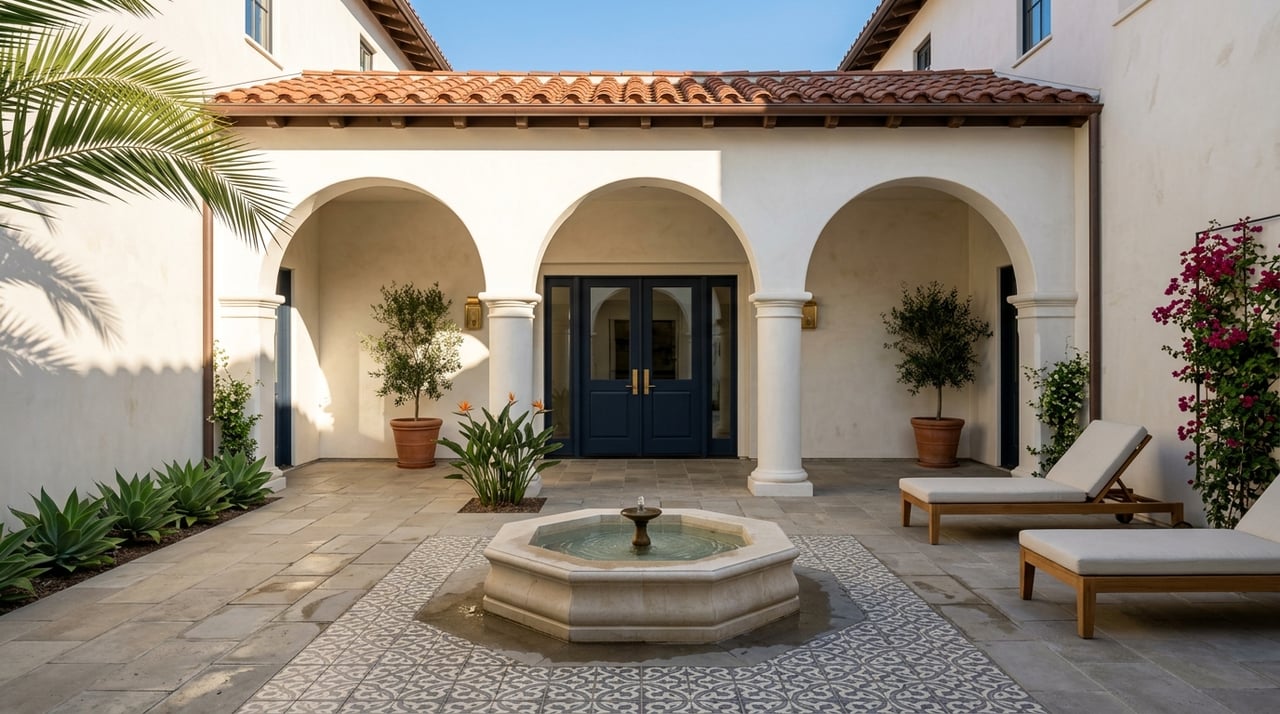
What Drives Performance At Los Angeles Boutique Hotels
June 18, 2026
June 18, 2026
What makes one Los Angeles boutique hotel outperform another in the same city, and sometimes in the same cycle? In LA, performance is rarely explained by a single marketwide trend. You are looking at a large, neighborhood-driven lodging market with uneven recovery patterns, mixed demand sources, and highly localized pricing power. This article breaks down the main drivers behind boutique hotel performance in Los Angeles and shows how investors and owner-operators can think about RevPAR durability and NOI resilience with more precision. Let’s dive in.
Los Angeles does not operate like a one-core hotel market. LA Tourism reports more than 30 culturally rich neighborhoods, and the city welcomed 49.1 million visitors in 2023, generating $40.4 billion in business sales and supporting more than 530,000 tourism-related jobs.
For boutique hotels, that scale matters because demand is spread across multiple micro-markets. HVS identifies distinct submarkets including Santa Monica, West Hollywood, Beverly Hills, Malibu, Venice Beach, Manhattan Beach, Long Beach, and the San Gabriel Valley. In practice, that means a boutique hotel often performs best when the surrounding neighborhood is part of the product.
In Los Angeles, a strong local identity can help justify premium pricing. A boutique asset with clear access to dining, arts, nightlife, wellness, beach activity, or walkable experiences is often better positioned than a property that feels generic.
This matters because guests do not always book Los Angeles as a single destination. They often book a specific area and want a stay that reflects that part of the city. For an investor or owner-operator, that makes neighborhood positioning a core performance variable rather than a branding detail.
Los Angeles has recovered meaningfully since the pandemic, but not evenly. HVS notes that LA occupancy was in the upper 70% range before the pandemic, recovered to just over 70% by 2023, and then stagnated in 2024 and 2025 due to entertainment strikes, softer leisure demand, weaker international travel, and early-2025 wildfire disruption.
That backdrop is important if you are evaluating performance. A property may be well run and still face demand friction tied to the broader market, especially if it relies heavily on traveler segments that have been slower to normalize.
CBRE expects modest U.S. RevPAR growth in 2025 and notes that urban locations are benefiting from group and business travel. At the same time, its Q1 2026 hotel figures show urban occupancy still at only 93.5% of 2019 levels.
HVS expects Los Angeles occupancy to take another two to three years to return to pre-pandemic levels. That means boutique hotel performance in LA still requires careful underwriting, especially if your strategy depends on a quick return to prior occupancy norms.
One of LA’s biggest strengths is the diversity of its demand base. LA Tourism says 67% of domestic overnight visitors drove to the city in 2023, 63% participated in entertainment activities, and 35% participated in sporting activities.
The city also hosted 21 citywide conventions in 2023, drawing more than 390,000 attendees and nearly 182,000 room nights. For boutique hotels, that means demand can come from several directions at once rather than one dominant channel.
A boutique hotel in Los Angeles may draw from:
That mix can improve resilience if the hotel is positioned to capture more than one segment. A property that depends on only one traveler type may be more exposed when that segment slows.
Not every boutique hotel needs to appeal to every traveler. In fact, performance often improves when the property has a clear fit with the guest segments most likely to book that neighborhood.
For example, a hotel near arts and dining activity may benefit from event-led stays and local food programming. A coastal property may align more naturally with drive-market leisure demand. The key is not broad appeal alone, but alignment between location, experience, and the most reliable demand sources.
Air access remains a major factor in Los Angeles lodging demand. According to LAWA, LAX handled 76.6 million passengers in 2024, including 23.99 million international passengers, making it the fifth-busiest U.S. airport by passenger volume.
But the trend line is not perfectly smooth. LAWA reports that FY2025 passenger traffic slipped 1.7% year over year, and HVS adds that international traffic remained 6.7% below 2019 in 2024 and an estimated 10% below pre-pandemic levels in 2025.
If you are evaluating a boutique hotel that depends heavily on long-haul international demand, airlift trends deserve close attention. Properties tied closely to global gateway travel may have more upside when international travel strengthens, but they may also be more sensitive to volatility.
By contrast, hotels with a stronger domestic or drive-to customer base may be somewhat less exposed to those swings. In Los Angeles, understanding how much of your demand depends on international recovery is a practical part of asset-level strategy.
In LA, experience is a revenue driver, not just a marketing theme. Los Angeles Tourism has leaned into event-based campaigns designed to turn local happenings into overnight stays, and signature programming such as Dine LA highlights the market’s strength in culinary demand.
In 2025, LA Tourism also spotlighted PST ART: Art & Science Collide, which included more than 818 artists and 50 exhibitions, alongside live entertainment, wellness, and neighborhood-focused experiences. These patterns reinforce a clear point: boutique hotels in Los Angeles often perform best when they create reasons to book beyond the room itself.
HVS notes that boutique properties increasingly view food and beverage, spas, and retail as active businesses rather than passive amenities. That is a meaningful distinction for owners because it shifts the focus from simple occupancy to total revenue contribution.
When programming is intentional, it can support ADR, increase ancillary spend, and strengthen the property’s market identity. In a city like Los Angeles, that can make the difference between average performance and durable pricing power.
If you are underwriting boutique hotels in LA, RevPAR should be part of the conversation, but not the whole story. CBRE forecasts 2025 U.S. RevPAR growth of 1.3%, and HVS believes ADR in Los Angeles should continue to grow, supported by limited new hotel development and a diversified economy.
That is encouraging, but topline gains can be misleading if costs rise faster than revenue. CBRE notes that inflation can erode nominal RevPAR gains, which means real performance depends on margin discipline as much as room revenue.
For boutique assets, stronger NOI often comes from converting location and experience into rate strength and ancillary revenue. HVS emphasizes intentional positioning and disciplined asset management, while CBRE’s brand-performance work suggests that more branding alone does not automatically create stronger RevPAR.
In practical terms, the better-performing LA boutique assets are often the ones that can protect price, drive profitable on-property revenue, and manage operating costs with discipline. That is especially important in a recovery that remains uneven.
Citywide averages can be useful for context, but they are rarely enough for decision-making in Los Angeles. A more useful approach is to evaluate boutique opportunities by demand cluster and neighborhood identity.
HVS groups LA into luxury and coastal submarkets such as Santa Monica, West Hollywood, Beverly Hills, Malibu, Venice Beach, and Manhattan Beach, along with business-oriented areas such as Long Beach and the San Gabriel Valley. That framework can help you compare assets based on what truly drives demand.
When reviewing a boutique hotel opportunity in Los Angeles, consider these screening questions:
This is not a substitute for asset-level underwriting. It is a practical way to filter opportunities in a market where local context matters more than broad averages.
Los Angeles also has visible future demand catalysts. HVS says the city will host eight FIFA World Cup matches between June 12 and July 10, 2026, and notes that matches involving major European nations could create compression in the right submarkets because of strong supporter bases and direct European airlift.
HVS and CBRE also point to the 2028 Summer Olympics as another major catalyst. HVS further notes that the Los Angeles metro already has more than a dozen properties above the $750 ADR tier, which suggests meaningful premium pricing potential in the strongest locations.
Large events can lift the market, but the benefits are rarely uniform. Hotels in the right submarkets, with the right guest mix and rate strategy, may capture outsized upside. Others may see only limited benefit if their location or product does not align with event-driven demand.
That is another reason neighborhood positioning remains central to boutique hotel performance in Los Angeles. Big market catalysts matter, but local fit still determines who captures the value.
The strongest Los Angeles boutique hotels tend to share three traits: a differentiated neighborhood story, access to multiple demand segments, and programming that supports premium rates. Those factors matter because LA is not a simple occupancy story. It is a layered market where micro-location, guest mix, airlift exposure, and on-property experience all shape performance.
If you are evaluating a hotel acquisition, repositioning, or exit in this market, the most useful question is not whether Los Angeles is strong in the abstract. It is whether a specific asset can translate place, demand diversity, and experience into durable RevPAR and resilient NOI over time.
For owners and investors navigating hotel acquisitions, dispositions, or value-creation strategy, Robert Rauchhaus offers confidential, advisory-led guidance grounded in hospitality brokerage, asset management, and complex transaction strategy.
Stay up to date on the latest real estate trends.
Learn more about commercial sales, leasing, business sales, M&A, and asset management.
Get In Touch With Our Team To Learn More
PO BOX 30766 SANTA BARBARA CA 93130