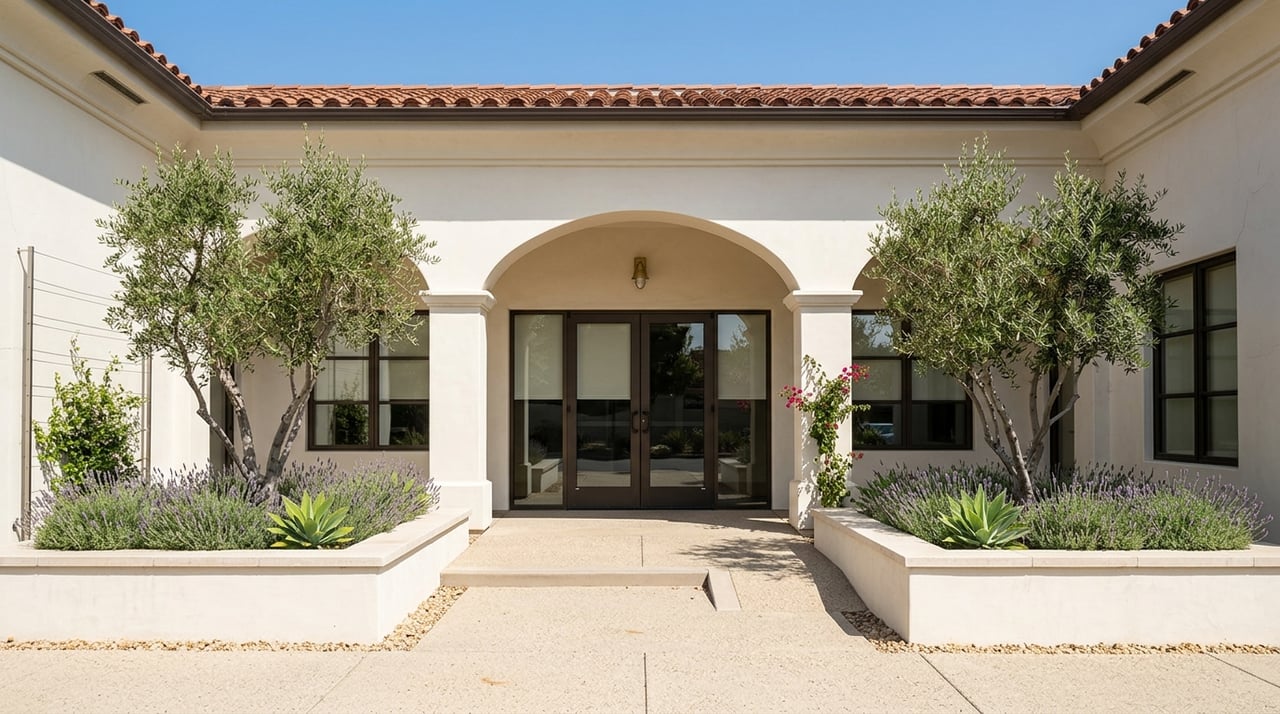
Sale-Leaseback Strategies For Los Angeles Medical Office
June 11, 2026
June 11, 2026
If you own a medical office building in Los Angeles, a sale-leaseback can look like the best of both worlds: you unlock equity without moving your practice. But the structure only works if the lease, pricing, and tax impact are modeled together from the start. This guide walks you through how Los Angeles medical office sale-leasebacks are being priced, where owners can gain leverage, and which issues deserve close attention before you sign. Let’s dive in.
Los Angeles medical office remains meaningfully tighter than the broader office market, which helps explain why sale-leasebacks are attracting attention. In CBRE’s Q1 2026 Greater Los Angeles medical outpatient building report, metro vacancy was 9.6%, while Colliers reported broader office vacancy at 24.8% in Greater Los Angeles in Q4 2025.
That gap matters because investors usually view medical office as a more durable occupancy story than general office. The same CBRE report showed average asking rent for Los Angeles medical outpatient buildings at $4.10 per square foot per month full service gross, compared with $4.05 for general office.
Activity also supports the case for continued investor interest. CBRE reported nearly 196,000 square feet of leasing activity in Q1 2026, almost double the prior quarter, with sales volume near $97 million.
At a national level, the sector also entered 2026 with strong fundamentals. JLL reported record-high medical outpatient occupancy of 92.7% in Q4 2025, year-over-year rent growth of 3.3%, and cap-rate compression of 60 basis points.
A sale-leaseback is straightforward in concept. You sell the property to an investor and then lease it back so you can continue operating from the same location.
In many cases, these deals are structured as long-term triple-net leases. That means the tenant typically takes responsibility for real estate taxes, insurance, and ongoing maintenance while keeping day-to-day operational control of the building.
For a medical office owner, the appeal is liquidity. You can convert real estate equity into usable capital while staying in place, which may support debt reduction, expansion, acquisitions, or succession planning.
The trade-off is just as important. A higher rent may support a higher sale price, but that also increases your future occupancy cost and affects annual cash flow.
Not all Los Angeles medical office properties should be priced the same way. One of the most important points in underwriting is that submarket conditions can vary sharply.
CBRE’s Q1 2026 data showed Downtown Los Angeles medical outpatient vacancy at 3.5%, West Los Angeles at 14.0%, and the metro average at 9.6%. A building in a tighter submarket may attract stronger pricing than one in a softer pocket, even if both are within Los Angeles County.
That means countywide headlines are not enough. If you are evaluating a sale-leaseback, the investor will likely focus on your specific submarket, building utility, tenant strength, and long-term residual value.
Investors generally price a sale-leaseback around the quality and durability of income. In practice, that usually means they are looking closely at five issues:
A buyer is not only purchasing your building. The buyer is also underwriting your lease as an income stream.
That is why sale-leasebacks often reward a strong operator with a mission-critical location. If your building is central to your operations and your financial profile supports long-term occupancy, the income stream may look more secure to investors.
Rent setting is also strategic. Kirkland notes that rent is often set using a rental constant with scheduled escalations, but the buyer still cares about what the property may be worth when the lease ends.
The lease is where many of the real economic outcomes are determined. A strong sale price can lose its appeal if the lease limits your flexibility in ways that hurt operations later.
Several terms deserve careful attention in a Los Angeles medical office sale-leaseback:
A longer initial term may support stronger pricing because it gives the buyer more predictable income. But you should weigh that against how much flexibility you may want in the future.
Renewal options matter for the same reason. They can help protect your occupancy strategy, especially if the building is difficult to replace or highly integrated into your operations.
Escalations are becoming more important in medical office. JLL reported that 3% annual bumps or CPI-tied provisions are becoming more common in the sector.
That may help support valuation today, but it also increases future rent obligations. You should model these increases over the full initial term and any likely extension periods.
If your operating model changes, assignment and subletting rights can become critical. These provisions affect your ability to bring in another tenant, restructure occupancy, or respond to a merger, affiliation, or practice change.
In medical office, buildout and operational control often matter more than in standard office leases. Parties often negotiate over who controls future alterations, expansions, or the economics tied to those improvements.
This is one reason a sale-leaseback should be treated as both a real estate transaction and an operating-business decision. The property may be sold once, but the lease obligations can shape your business for years.
In California, the tax treatment of a sale-leaseback can differ significantly from a refinance. That difference can change the economics in a meaningful way.
According to the California State Board of Equalization, lease transactions with 35 years or more remaining can trigger change-in-ownership treatment, and its sale-and-leaseback guidance states that an owner who sells and leases back for more than 35 years is treated as the property owner for change-in-ownership purposes.
In most ordinary medical office sale-leasebacks, the leaseback term is shorter than that threshold. As a result, the safer planning assumption is often that the transaction will be a reassessment event.
That matters because reassessment can increase the property tax basis. If you are comparing a sale-leaseback to a refinance, this is one of the key differences to model before moving forward.
California also requires reporting. If the transfer is recorded, the buyer generally files the change-in-ownership report at recording. If it is not recorded, the filing deadline is generally within 90 days, and failure to report can lead to penalties and escape assessments.
For properties in the City of Los Angeles, transfer taxes can materially affect how much cash you actually receive. This is often one of the most important underwriting points in larger transactions.
The City of Los Angeles states that its real property transfer tax is an excise tax on the privilege of selling a real property interest. The base city tax is 0.45%, and Measure ULA adds 4% above the current threshold and 5.5% above the higher threshold.
As of June 8, 2026, the City lists current thresholds of $5.3 million and $10.6 million, with new thresholds of $5.4 million and $10.9 million applying to closings after June 30, 2026. Los Angeles County also imposes documentary transfer tax at $0.55 per $500, with higher city-specific rates applying in the City of Los Angeles.
The practical point is simple: headline price is not the same as net proceeds. The City notes that Measure ULA is calculated on gross value, including assumed debt, so your net cash may be lower than expected if taxes are not modeled from day one.
A sale-leaseback is usually most compelling when your building is operationally important and you want to stay in place. It can also be attractive when you have a clear use for the capital rather than simply seeking liquidity for its own sake.
Common strategic reasons include:
The structure may be less attractive if future rent obligations would strain cash flow or if taxes and reassessment meaningfully reduce net proceeds. In other words, the question is usually not whether a sale-leaseback can create liquidity. The real question is whether the long-term lease economics justify the capital you unlock today.
Before bringing a Los Angeles medical office sale-leaseback to market, it helps to pressure-test the deal in a disciplined way. A clear framework can reduce surprises later.
Consider these core questions:
For owner-operators, this last point is especially important. In complex assets, property decisions and operating decisions are often inseparable.
A measured process can help you compare a sale-leaseback against alternatives such as refinancing, recapitalization, or a full disposition. The right answer depends on your balance sheet, operating outlook, and timeline.
If you are evaluating a medical office sale-leaseback in Los Angeles, strategic underwriting matters as much as marketing. Robert Rauchhaus provides discreet, advisory-led guidance for complex commercial real estate decisions, including valuation, positioning, and transaction strategy. Schedule a confidential consultation to discuss strategy and valuation.
Stay up to date on the latest real estate trends.


Learn more about commercial sales, leasing, business sales, M&A, and asset management.
Get In Touch With Our Team To Learn More
PO BOX 30766 SANTA BARBARA CA 93130