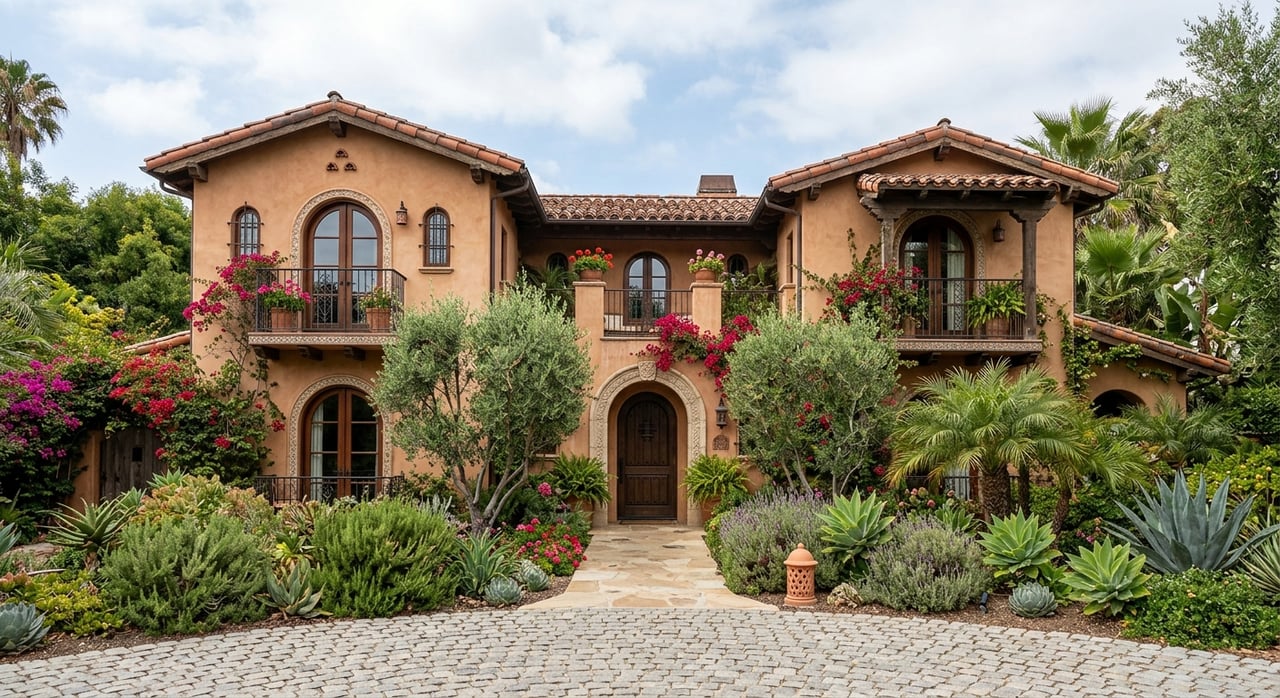
How Coastal Seasonality Impacts Ventura Hotel Assets
July 9, 2026
July 9, 2026
If you underwrite a Ventura hotel asset on annual averages alone, you can miss the story that matters most. Ventura has real year-round coastal appeal, but hotel performance still rises and falls with summer travel, weekend demand, and event-driven compression. If you are evaluating a sale, refinance, renovation, or recapitalization, understanding that seasonal pattern can help you price risk more accurately and present the asset more credibly. Let’s dive in.
Ventura benefits from a steady tourism identity tied to beaches, Harbor Village, whale watching, and access to the Channel Islands. Visitors can reach Anacapa and Santa Cruz Islands from Ventura throughout the year, which supports a broader travel base than a purely summer-only beach market.
Still, the local hotel data show that demand is not evenly distributed across the calendar. City data reported occupancy at 67% in Q1 2025, rising to 79% in Q3 2025, before easing to about 70% in Q4 2025. Average daily rate also climbed from about $146 in Q1 to the mid-$160s in Q2 before softening later in the year.
For owners and investors, that pattern matters. It suggests Ventura is best understood as a coastal leisure market with recurring seasonal peaks, not a market with uniform monthly performance.
Ventura’s highest-performing periods tend to cluster around summer and major event dates. The Ventura County Fairgrounds at Seaside Park hosts the county fair, concerts, rodeos, and other large draws, and the 2026 fair is scheduled for July 29 through August 9.
That kind of event calendar can create sharp booking compression. In practice, some of the best rate opportunities may come from a limited number of weekends and event weeks rather than from broad, evenly spread demand across the entire year.
This is why a summer ADR spike should be analyzed carefully. A few standout periods can lift annual results, but they do not necessarily change the underlying softness that can appear in winter or midweek shoulder periods.
Ventura is not just a day-trip market. According to the city’s 2025 tourism data, regional visitors generated 1.24 million trips and 1.56 million visit nights, while long-distance domestic visitors generated 456,700 trips and 834,600 visit nights.
That overnight activity supports the hotel sector directly. The same report shows hotels captured about 22.7% of regional visitor spending and 23.3% of long-distance domestic visitor spending, confirming that lodging plays a meaningful role in the local visitor economy.
At the same time, timing patterns create volatility. Regional visitors most often arrived on Saturday, while long-distance domestic visitors most often arrived on Friday, and both groups averaged about 3 days in town.
For a hotel asset, that often translates into a market that is strongly weighted toward weekends. If you own or evaluate a property in Ventura, Friday and Saturday compression may carry outsized importance relative to slower weekday periods.
One of the more important details in the city data is overnight leakage. The report shows 16.2% leakage for regional visitors and 15.7% for long-distance visitors, meaning a notable share of overnight demand stays in nearby markets instead of Ventura itself.
That matters for asset analysis because it cuts both ways. On one hand, leakage suggests there is demand that Ventura hotels are not fully capturing today. On the other hand, it is a reminder that Ventura competes within a broader regional lodging landscape, so capturing more of that demand may require sharper positioning, operating discipline, or physical improvements.
For buyers and lenders, leakage is also a caution against assuming every visitor trend will convert directly into room night growth at the property level.
When a market has Ventura’s demand shape, month-by-month analysis becomes more useful than annual averages. A property can look strong on a trailing twelve-month basis while still having meaningful exposure to winter troughs, weekday softness, or post-event demand gaps.
A more defensible underwriting approach usually includes a few core steps:
This matters even more for repositioning or renovation deals. If capital improvements are expected to lift performance, the path to stabilization should reflect Ventura’s actual seasonal curve rather than a smooth, straight-line ramp.
For hotel valuation, the concept of stabilized occupancy can be useful, but it should not be vague. The Appraisal Institute notes that when a report uses stabilized occupancy, it should clearly define what that means and disclose the assumption.
In a seasonal market like Ventura, that point is especially important. A stabilized number that leans too heavily on peak summer performance can overstate sustainable income, while one that properly incorporates winter and shoulder periods may provide a more reliable basis for valuation or financing.
If you are preparing a property for sale or refinance, clear support for normalized occupancy and NOI can improve credibility with buyers, lenders, and appraisal professionals.
The lending environment described by HVS is more conservative than in prior loose-credit periods. As of April 2026, HVS reported average borrowing rates for stabilized, cash-flowing hotel assets of roughly 6% to 7%, with many lenders comfortable in the 55% to 65% loan-to-value range for stabilized assets.
That backdrop increases the importance of disciplined underwriting. Lenders may rely on loan-to-value and debt coverage metrics, and some may focus on historical NOI or the smallest projected NOI rather than a best-case forecast.
In Ventura, that often means a property has to prove it can carry debt through the weaker parts of the calendar, not just shine during peak summer months. Seasonal trough performance can be just as important as top-line summer upside.
For value-add or repositioning hotel deals, financing often has to bridge a re-stabilization period. HVS notes that lenders may structure that transition with features such as interest-only periods, rate adjustments, or earn-out elements while a property moves toward stabilized debt coverage.
That framework is highly relevant in Ventura. A renovation story may look compelling if you visit during the strongest season, but the true test is whether the business plan still works when evaluated against winter demand, shoulder periods, and any temporary disruption from capital work.
If you are planning a property improvement program, your timing, reserves, and operating assumptions should reflect the fact that Ventura’s revenue is not evenly earned throughout the year.
Ventura hotel owners also need to account for the city’s hotel-specific tax and assessment structure. Hotels collect the city’s 10% transient occupancy tax on room rent, and the city’s remittance framework also includes hotel-only VCWTBID and VTMD assessments at 2% each.
That means gross room rates do not tell the full story by themselves. When you compare performance, underwrite net revenue, or evaluate competitiveness against other lodging types, these local assessments should be part of the analysis.
The city notes that short-term vacation rentals collect the city TOT but are not subject to the two hotel-only assessments. For owners, that distinction is important when thinking about pricing, market competition, and net operating performance.
Ventura’s own market comparison suggests caution on aggressive pricing assumptions. The city reported that Ventura occupancy was generally comparable to the Ventura County average and Thousand Oaks, but below Camarillo, while Ventura ADR remained below the county average and below Oxnard with more limited pricing growth overall.
That does not mean Ventura lacks opportunity. It does mean investors should be careful about projecting peak-season rate growth too far into the future without support from the broader comp set.
In practical terms, the better story is usually not unlimited rate expansion. It is disciplined revenue capture during compressed periods, paired with realistic expectations for shoulder and off-peak performance.
If you own, market, or evaluate a Ventura hotel asset, seasonality should shape both strategy and narrative. The strongest presentation is usually one that acknowledges Ventura’s real coastal appeal while also showing a clear-eyed view of how revenue is earned across the calendar.
That often means:
Ventura can be a compelling hotel market, but it rewards disciplined analysis. Buyers, lenders, and sophisticated operators are usually best served by a seasonal underwriting model that reflects how the market actually behaves.
If you are considering a sale, recapitalization, or asset-level value creation strategy for a Ventura hospitality property, Robert Rauchhaus can help you evaluate the asset through a more strategic, data-driven lens.
Stay up to date on the latest real estate trends.



Learn more about commercial sales, leasing, business sales, M&A, and asset management.
Get In Touch With Our Team To Learn More
PO BOX 30766 SANTA BARBARA CA 93130