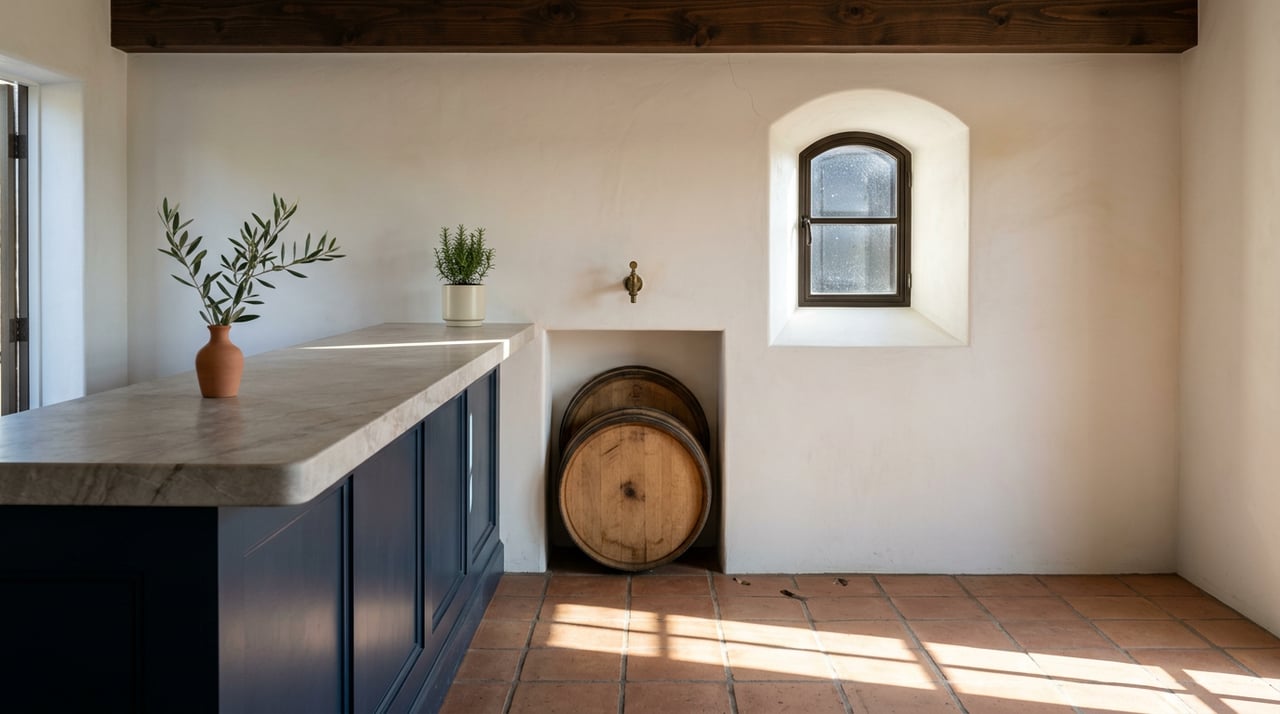
Santa Ynez Valley Vineyard Sales in 2026: The Two Prices Every Owner Should Model
August 6, 2026
August 6, 2026
Two Santa Ynez Valley vineyards can share the same AVA, the same acreage, and the same varietal mix and still trade at prices that look like they belong to different decades. That was already the story going into 2025. What changed in the last eighteen months is that both prices now carry a second, smaller number stacked on top: an annual assessment that did not exist when most current owners bought in, and that is presently the subject of a federal lawsuit.
For owners weighing a sale this year, the practical question is not whether the Central Coast vineyard market is up or down. It is whether your specific property is being underwritten as a premium asset or a distressed one, and how a buyer is modeling the new Wine Business Improvement District against the possibility that a federal judge invalidates it. Those two decisions, taken together, are moving valuations more than any headline about median price per acre.
In February 2025, the Santa Barbara County Board of Supervisors approved a Wine Business Improvement District that imposes a 1 percent assessment on qualifying winery sales, with the Santa Barbara County Vintners Association administering the funds for regional marketing. Reporting from the Lompoc Record and Santa Maria Times confirms the program applies to wineries generating more than $500,000 annually in direct-to-consumer sales. The Santa Barbara County Vintners describes the district as the largest Wine BID in the United States as of 2025.
For a Santa Ynez Valley winery that clears the DTC threshold, that is a new, recurring operating expense that flows straight through to net operating income. On a tasting-room-forward business doing $3 million in DTC, it is a $30,000 annual line. On a $10 million DTC operation with a robust club, it is a $100,000 hit that a buyer will capitalize at whatever multiple they are applying to the operating business.
Then there is the litigation.
Flying Goat Cellars, the Lompoc producer owned by Norm Yost and Kate Griffith, filed a federal lawsuit in late May 2026 in the U.S. District Court for the Central District of California, represented by the Goldwater Institute. The complaint argues the ordinance violates the First Amendment by compelling wineries to fund speech through mandatory Vintners Association membership, and the Fifth Amendment's Takings Clause by directing private revenue to a nongovernmental organization. Santa Barbara County Vintners CEO Alison Laslett has said the constitutional arguments have been rejected in prior California BID cases.
A sophisticated buyer will not ignore that pending case. They will model two scenarios, weight them, and negotiate accordingly.
A useful way to think about the BID in a diligence context is that it functions as a permanent expense with an option attached. The expense is real today. The option is that the federal court invalidates or narrows the ordinance, at which point the expense drops out. Buyers underwriting your winery in 2026 are doing some version of the following:
If you have never itemized the BID in your financial package, a buyer will do it for you, and the number they arrive at will not be flattering. Owners preparing for a sale in the second half of 2026 should model the assessment cleanly, disclose payment history from 2025 forward, and be ready to discuss the litigation timeline factually. The federal case is captioned Flying Goat Cellars Inc. v. Santa Barbara County Board of Supervisors, and its docket is public.
The BID is the visible new variable. The larger, less visible variable is that the Central Coast vineyard market itself is splitting in two.
The California Chapter of the American Society of Farm Managers and Rural Appraisers publishes an annual Trends in Agricultural Land and Lease Values report. The 2026 edition, covering 2025 activity, describes Central Coast Region 6 vineyard values as mostly stable to softening, with lower-end pricing showing up at levels the market has not seen since the mid-1990s. That bottom of the range does not describe the whole market. It describes a specific subset of properties with identifiable weaknesses: uncertain water, no grape contracts, older improvements, weaker location within the AVA, or a thin income continuity story.
Vineyards on the other side of the split, the ones with reliable water, active contracts, and defensible location within a premium AVA, are still trading at normal pricing. The market has stopped valuing all vineyards the same way. That is the sentence Santa Ynez Valley owners should read twice.
Two Central Coast comparables published by Vineyard Professional Real Estate illustrate the range:
| Property | Location | Sale price | Timing | Detail |
|---|---|---|---|---|
| Rancho Real Vineyard, 436± acres | Santa Maria Valley AVA | $8,800,000 | August 2025, sold at auction | Originally listed at $22,000,000 in 2023; ~192 acres of Pinot Noir planted 2008; two wells at ~600 GPM; seller Gallo Vineyards, buyer Testa Land Co. LLC |
| 82± acre wine country estate | Paso Robles | $2,525,000 | October 2025 | 203 days on market; original list $3,295,000; had previously operated as winery, tasting room, and event venue from 2008 to 2018 |
Two different stories. Rancho Real cleared at roughly 40 percent of a 2023 asking price after moving to auction. The Paso Robles estate, with a multi-use history and improvements, still required more than six months of exposure and a roughly 23 percent reduction from list. Neither is a distressed sale in the conventional sense. Both signal that even functional, well-located Central Coast properties are meeting a selective buyer pool.
Water is the differentiator that keeps surfacing. CALASFMRA's Central Coast commentary notes that vineyards without reliable irrigation water face softer demand and downward pressure on value. In practical terms, if your Santa Ynez Valley property sits over reliable groundwater, has documented well performance, and can show a defensible long-term water story, you are in a different pricing conversation than a neighbor with the same acreage and a different aquifer position.
Bringing the two threads together, the owner preparing a 2026 sale needs to answer two questions before pricing, not one.
First, which bucket does the vineyard itself sit in? That answer comes out of a candid look at water, contracts, farming history, AVA position within the Santa Ynez Valley, Sta. Rita Hills, Ballard Canyon, Los Olivos District, Happy Canyon, or Alisos Canyon, and the quality of any improvements. A property that belongs in the premium bucket should not be marketed as if it belongs in the commodity bucket, and vice versa. Overpricing a softer property into premium territory is the fastest way to reproduce the 203-day exposure and the eventual reduction.
Second, how is the operating business affected by the BID, and what is your defensible narrative about the pending litigation? A buyer will want to see:
None of this changes what your vineyard is worth on its fundamentals. It changes how quickly a buyer can get comfortable, which changes days on market, which changes the final number.
The Santa Barbara County wine industry produces roughly $1.7 billion in annual economic activity, supports around 10,200 local jobs, and draws about 1.1 million annual visitors who spend roughly $117 million on wine-related tourism, according to the California Wine Institute figures reported by the Economic Alliance Foundation. Those numbers matter to a buyer because they underwrite the tourism-driven DTC model that most Santa Ynez Valley wineries depend on. They are also part of the case supporters make for the BID. Whether the assessment survives federal review or not, the underlying tourism thesis is what a buyer is paying for.
Does the 1 percent assessment apply to bulk or wholesale sales? The reported program targets qualifying direct-to-consumer sales for wineries above the $500,000 DTC threshold. Owners should confirm current scope with counsel and with published county materials before making representations to buyers.
If the Flying Goat lawsuit succeeds, do I get my 2025 and 2026 assessments back? That is a remedies question that will depend on how the court rules. It is not something a seller should represent one way or the other in a purchase agreement.
Should I wait for the case to resolve before listing? The federal docket will move on its own schedule. Waiting has its own cost, including carrying a business through another vintage and another set of market conditions. Most owners are better served pricing to the market that exists today and disclosing the litigation cleanly than trying to time a federal ruling.
What if my property is under the $500,000 DTC threshold? Then the BID is a smaller factor in your underwriting, and the bifurcation story is the dominant variable. The diligence conversation shifts toward water, contracts, and AVA position rather than assessment exposure.
Selling a Santa Ynez Valley vineyard or winery in 2026 is a two-price exercise: the fundamentals price and the operating-business price, each with its own diligence discipline. Robert Rauchhaus advises owners of vineyards, wineries, and operating hospitality assets across the Central Coast on valuation, positioning, and transaction strategy. Schedule a confidential consultation to discuss strategy and valuation for your property.
Stay up to date on the latest real estate trends.
Learn more about commercial sales, leasing, business sales, M&A, and asset management.
Get In Touch With Our Team To Learn More
PO BOX 30766 SANTA BARBARA CA 93130