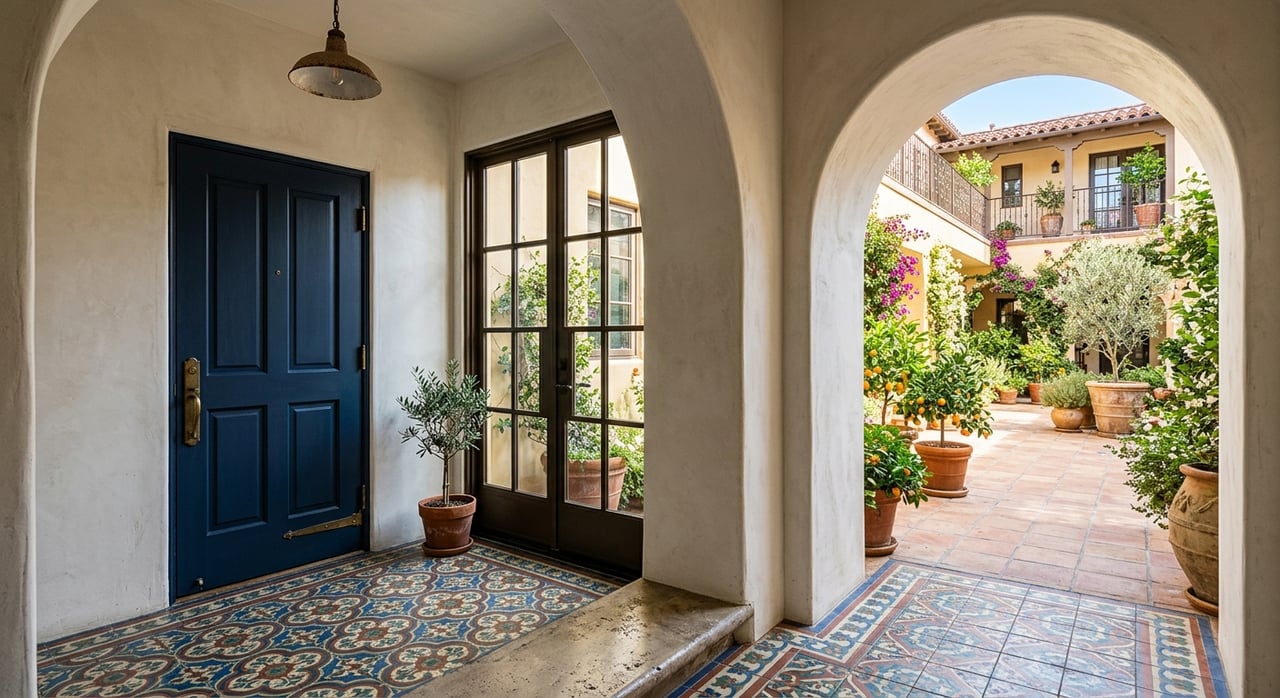
Downtown San Luis Obispo Hospitality And Mixed-Use Trends
July 23, 2026
July 23, 2026
If you are watching downtown San Luis Obispo, one trend stands out fast: hospitality and mixed-use are no longer separate stories. In the downtown core, lodging, food and beverage, upper-floor housing, and walkable street activity are increasingly working together. For owners, investors, and hospitality-minded buyers, that makes the market more strategic than it may first appear. Let’s dive in.
Downtown San Luis Obispo benefits from a demand base that is broad enough to matter and varied enough to support multiple property types. The market appears to sit at the overlap of Cal Poly activity, regional tourism, and local civic and business spending.
Cal Poly reported 23,245 students in fall 2025, the highest enrollment in university history. That creates recurring demand not only from students, but also from parents, visiting families, alumni, and university-related events. For downtown hospitality and mixed-use properties, that kind of institutional demand can help support year-round activity.
Tourism is also a major economic force in the county. Visit SLO CAL reported $2.4 billion in direct travel spending in 2024, along with 23,820 local jobs tied to travel activity and 10.39% of county GDP. The county generated $60.1 million in transient occupancy tax, while the City of San Luis Obispo said it collected nearly $11 million in TOT in fiscal 2023-24, its highest amount to date.
Those topline figures matter because they show both visitor volume and public revenue tied to overnight stays. In practical terms, downtown is benefiting from a lodging economy that already has measurable depth. That tends to support continued interest in hotel repositioning, mixed-use redevelopment, and experience-driven ground-floor uses.
Visit SLO CAL’s FY24 report showed about 7.4 million visitors, roughly 64.5% hotel occupancy, about $189 average daily rate, and about $122 RevPAR. For a downtown investor or owner-operator, that mix suggests active lodging demand with room for thoughtful differentiation.
This is important because markets with healthy demand but not extreme supply compression can create repositioning opportunities. If you are evaluating an existing asset, the question may be less about whether demand exists and more about how your property participates in it. Public-facing amenities, restaurant partnerships, and upgraded common areas can become part of that answer.
Downtown San Luis Obispo does not read as a market where lodging succeeds in isolation. The trend appears to favor hospitality assets that connect to the street, contribute to the visitor experience, and add reasons for locals and guests to spend time on-site.
The planning framework in San Luis Obispo is not neutral on this topic. The city’s Downtown Concept Plan explicitly identifies downtown as the center for culture, commerce, and government and promotes pedestrian activity, bicycle connections, and redevelopment of surface parking lots into denser retail and mixed-use development.
That policy direction matters for anyone underwriting future use. The illustrative plan includes commercial mixed use with upper-level residential and or office uses, office mixed use, hospitality hotels and conference facilities, and parking that may be above or below grade. In other words, the city’s long-range vision already anticipates a more layered downtown core.
Zoning rules reinforce that direction. The city requires mixed-use projects to combine residential with other uses, restricts most ground-floor residential along street frontages, and requires design attention to noise, loading, trash, and circulation.
For owners and investors, that means mixed-use is encouraged, but execution still matters. A project has to work as an urban building, not just as a stack of uses. Ground-floor activation, service planning, and circulation design are part of feasibility.
The city’s Housing Element notes that downtown historically had apartments above ground-floor commercial uses and that mixed-use is encouraged, especially in the Downtown Core. That historical pattern is important because it supports the idea that upper-floor residential is not a new concept imposed on downtown, but part of its long-term urban form.
San Luis Obispo has also created the Downtown Flexible Density Program. The program is intended to add smaller residential units in the Downtown Core without increasing building scale or height, while reducing parking requirements and exempting qualifying units from inclusionary housing rules through January 1, 2029 or until 500 units are reached.
From a value-creation standpoint, this lowers some friction for projects that place housing above active ground-floor uses. If you are evaluating an infill site or a redevelopment scenario, the ability to add small upper-floor units without increasing mass can materially affect design and pro forma options.
That does not make every deal easy. It does suggest that policy is aligned with compact, mixed-use downtown product rather than lower-intensity standalone formats.
Recent downtown hotel activity shows a clear pattern. Lodging is increasingly being packaged as a public-facing experience instead of a closed-off room product.
Hotel SLO opened with 78 rooms, two restaurants, a bar, banquet facilities, spa space, and rooftop space open to the public. Hotel Cerro opened downtown with 65 rooms, a rooftop pool, an edible garden, a restaurant, and a spa.
Petit Soleil reopened after a major remodel under new ownership in 2024, and ownership said the next phase included a cocktail bar and restaurant. Taken together, these examples suggest that downtown hospitality performance is increasingly tied to what happens beyond the guest room.
If you own or are considering a hotel asset in this market, that trend has strategic implications. Food and beverage, events, rooftop or gathering space, and local-facing programming may be part of the revenue story and part of the property’s market identity.
The surrounding restaurant scene also supports the hospitality story. Downtown openings in 2024 and 2025 included Lure Fish House in a new mixed-use building at Monterey and Santa Rosa, Feral Kitchen + Lounge in the former Mother’s Tavern space, and Condesa next to Petit Soleil.
These openings reinforce a pattern in which boutique hotels, restaurant concepts, and a walkable public realm support one another. When a downtown district adds dining momentum, hospitality assets can benefit from stronger foot traffic and broader guest appeal. At the same time, restaurants can benefit from nearby lodging demand and event activity.
For mixed-use owners, this relationship matters because ground-floor tenancy is not just about rent. In the right location, it can shape the identity of the entire building and improve the performance of upper-floor uses.
The city’s housing inventory includes multiple downtown parcels identified as large residential or mixed-use residential projects under review. That suggests the downtown pipeline remains active, even if entitlement timelines move slowly.
One inventory entry describes a surface parking lot behind a two-story office and retail structure. That detail is small, but it points to a broader theme: underutilized land in the downtown core is still being evaluated for higher-intensity redevelopment.
Adaptive reuse is part of the story as well. The Anderson Hotel renovation is a visible example of upper-floor reuse, with HASLO preserving 66 affordable units in the 1923 building while completing seismic, accessibility, life-safety, and storefront upgrades.
For investors and owner-operators, the message is straightforward. Downtown opportunity is not limited to ground-up development. It can also come from repositioning older assets, reworking upper floors, and improving how a property engages the street.
Even in a walkable downtown, access and parking remain part of the equation. City leadership’s 2025-27 goals include improving the local business environment and supporting downtown vitality.
The planned Cultural Arts District Parking Structure is intended to meet downtown parking demand and support the planned cultural corridor. The city’s parking management framework also aligns access, mobility, and downtown business support.
That matters because walkability does not eliminate operational needs. Hotel arrivals, restaurant deliveries, service access, employee circulation, and customer convenience still shape project success. If you are evaluating a site, circulation and parking strategy deserve as much attention as unit count or room count.
Based on city policy and recent market activity, the most durable downtown product types are likely to be small-footprint infill projects that stack housing or lodging above active ground-floor retail, restaurant, or lobby uses. That view is supported by both the city’s planning direction and the way newer hospitality projects are interacting with the public realm.
For buyers, this means downtown San Luis Obispo may reward assets that do more than fill space. The stronger plays may be the ones that combine street presence, upper-floor productivity, and an operating concept that fits a walkable district.
For sellers and long-term owners, the market may increasingly value properties through both real estate and business-performance lenses. That is especially true where hospitality operations, restaurant programming, leasing strategy, and physical repositioning are intertwined.
In a market like this, strategy matters as much as location. Understanding entitlements, use mix, guest or tenant demand, and value-creation pathways can help you see the difference between a stable downtown asset and a high-potential one.
If you are evaluating a hotel, mixed-use building, redevelopment site, or an operating asset where real estate and business value overlap, a measured advisory approach can help you identify the right next move. To discuss strategy and valuation confidentially, connect with Robert Rauchhaus.
Stay up to date on the latest real estate trends.
Learn more about commercial sales, leasing, business sales, M&A, and asset management.
Get In Touch With Our Team To Learn More
PO BOX 30766 SANTA BARBARA CA 93130