Downtown LA Isn't Building New Hotels. It's Reopening the Same Three Buildings.
September 17, 2026
September 17, 2026
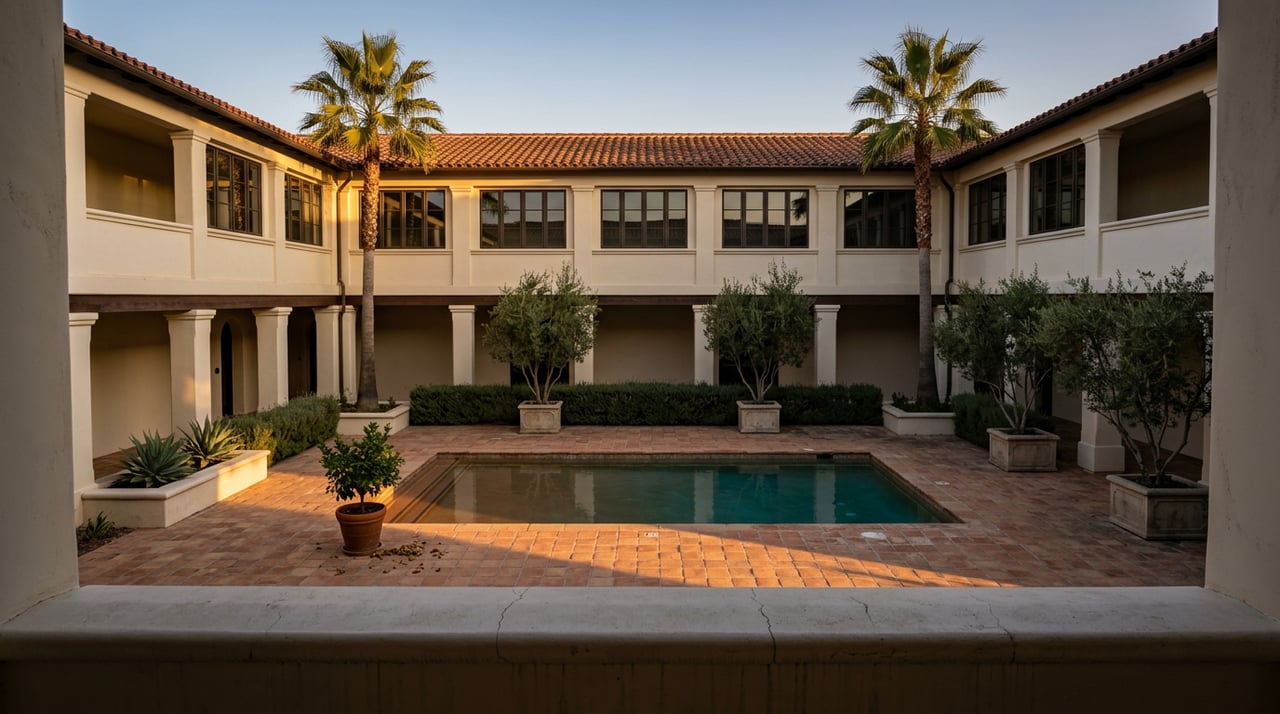
Walk past the pool deck at Hotel Figueroa on a Thursday night and you will find a restaurant that did not exist eight months ago, filled with people who have no idea the building itself turns 100 this year. The DJ booth sits a few feet from where YWCA staff once checked in single women traveling alone for work, back when that alone was the entire point of the place. Nothing about the scene announces its own history. That is the trick Downtown LA keeps pulling, over and over, in building after building.
If you have noticed a lot of hospitality news out of DTLA lately and assumed it means new hotels are going up, you are half right. Something is expanding. But almost none of it involves new foundations. The actual mechanism is a small number of pre-Depression buildings changing hands, changing names, and reopening under new management, sometimes twice in the same decade. Once you see the pattern, you start reading every DTLA restaurant opening differently. The story is rarely the restaurant. It is the building underneath it, and how many times that building has already done this.
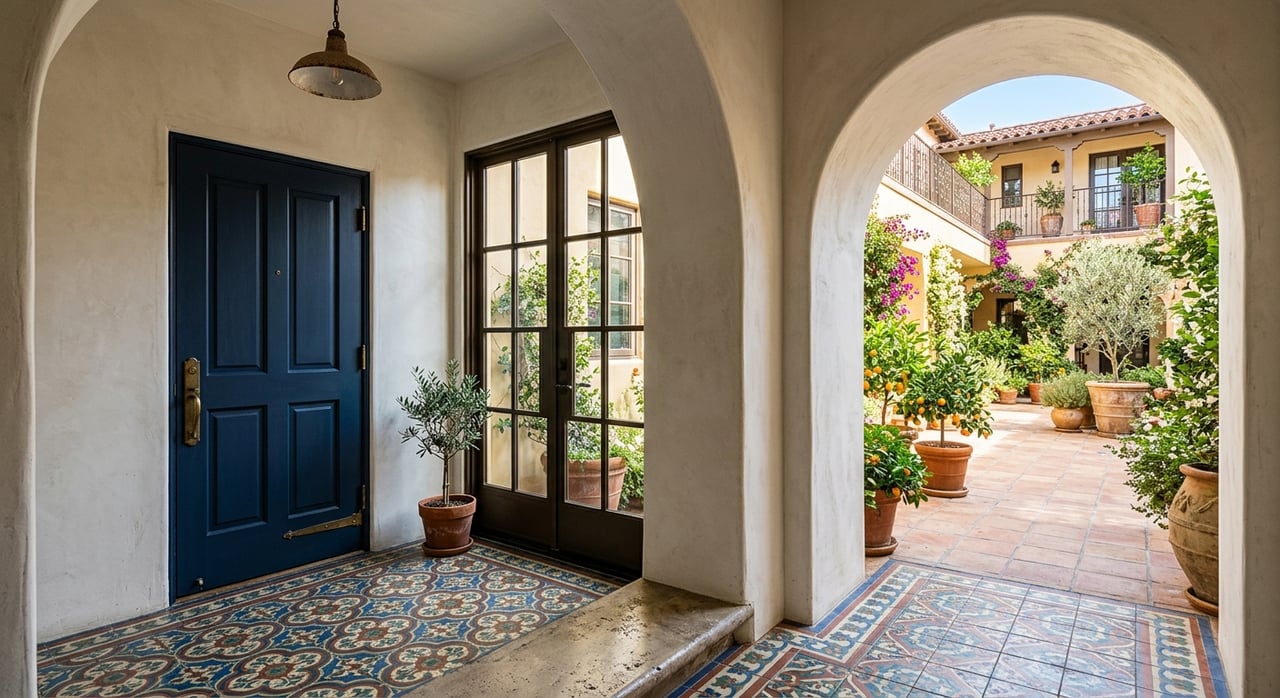
Hotel Figueroa opened its doors in 1926, founded by the YWCA specifically as a place where professional women could stay without a male escort. That was the entire premise of the building for decades. Then, sometime in the 1970s, it became something else entirely: a Moroccan-themed hotel, tile work and all, a full identity swap from its original mission. It stayed that way until 2014, when a restoration brought it back to its Spanish Colonial Revival bones.
Now it is doing this again. This year, as the hotel marked its 100th anniversary with a celebration on August 28, it opened Florence by the Water, a coastal Mediterranean restaurant built around the hotel's pool. The restaurant launched February 13 from Francesco Zimone, the CEO behind L'Antica Pizzeria da Michele's Naples-to-Hollywood expansion, and executive chef Giuseppe Gentile, who grew up cooking on his family's farm in Locorotondo, Puglia before training in Italy's top kitchens. The property is now part of Hyatt's Unbound Collection, another layer added to a building that has already been a women's residence, a Moroccan fantasy, and a restored landmark.
That is three distinct identities in one address over one century, and the fourth just opened this spring.
If Hotel Figueroa's reinventions play out across decades, the building at 929 S. Broadway compresses the same pattern into a fraction of the time. Built in 1927 as the United Artists Building, a 13-story office tower with a theater designed by C. Howard Crane for the studio Mary Pickford, Charlie Chaplin, Douglas Fairbanks, and D.W. Griffith formed to control their own films, the building spent decades as commercial space before its next act.
In 2014, it became the Ace Hotel Downtown Los Angeles, and the theater reopened the same year as the Theatre at Ace Hotel. That version lasted a decade. The Ace closed for good on January 31, 2024. Within weeks, the same building reopened as STILE Downtown Los Angeles, still owned by AJU Continuum but now managed by Kasa Living, with the theater rebranded once more as the United Theater on Broadway, a name it still carries. According to the Los Angeles Conservancy, the building itself, and its role as the anchor of the Broadway Theater District, has stayed constant even as the hotel brand and the theater name have both turned over.
STILE did not stop at a name change either. This year brought a full interior redesign, a members-only creative space called SparkHouse with recording studios and podcast suites, a cassette library, and a restaurant serving Mediterranean small plates alongside a menuless natural wine program. A building that spent a century as offices, then a decade as a boutique hotel with cultural cachet, is now positioning itself as something closer to a clubhouse.
One address, one theater, two hotel brands and a full redesign in twelve years. The building never moved. Only the operator did.
The third example sits in the Jewelry District, at 7th and Hill. Built in 1929 as the flagship store and corporate headquarters for the menswear chain Foreman & Clark, the building is a designated Los Angeles Historic-Cultural Monument, its lobby still lined with the original marble and decorative tile from the department store era.
Sonder announced its conversion of the space in 2023, opening it as The Winfield, a 125-key hotel with kitchenettes in every room and two penthouse suites running 2,000 and 2,800 square feet. At the time, Sonder called it one of two adaptive reuse projects launching in Downtown LA that year, the other being the Lane Mortgage Building's conversion into The Craftsman. Three years later, the building operates under yet another name and flag: The Winfield Lofts, a Wyndham Hotel. The building did not change. The company running it did, again.
Three buildings, three timelines, one shared mechanic:
None of this shows up if you are watching for cranes. DTLA's hospitality expansion right now is not a construction story. It is an operating story, and the churn rate is accelerating. Hotel Figueroa took roughly 88 years to move from its original identity to its restoration, then only 12 more to add a fourth chapter. The United Artists Building took a full 87 years to become a hotel at all, then only ten to rebrand once, then only two more to redesign itself again. The Foreman & Clark Building went from office space to a Sonder-run hotel-apartment hybrid to a different hotel flag entirely inside of about three years.
If you live in or near Downtown LA and you have felt like the neighborhood's food and hospitality scene refreshes faster than it used to, this is a plausible reason why. The supply of century-old, architecturally distinct buildings in the Historic Core, the Jewelry District, and South Park is fixed. What is not fixed is how many times an operator can relaunch one of them before handing the concept, the management contract, or the brand itself to someone else. Three buildings, each rebranded or redesigned at least once in the past twelve years, and none of them broke ground once.
For anyone who owns or operates a hospitality asset with this kind of history, whether in a dense urban core or in a smaller market with its own inventory of distinctive older buildings, the pattern is worth sitting with. A building's age is not a liability to be waited out. It can be the actual product, relaunched again and again as the market and the operator change, as long as someone is paying attention to when the next relaunch makes sense and who should be running it.
That is the kind of question Robert Rauchhaus works through with hotel and hospitality owner-operators directly, combining brokerage execution with the asset management and repositioning strategy that these buildings clearly reward. If you are weighing whether your own property has another chapter left in it, schedule a confidential consultation to discuss strategy and valuation.
Stay up to date on the latest real estate trends.
Learn more about commercial sales, leasing, business sales, M&A, and asset management.
Get In Touch With Our Team To Learn More
PO BOX 30766 SANTA BARBARA CA 93130